The Xero Blog

The Shoes Powering Isaiah Stewart in the Playoffs

The Shoes Powering Isaiah Stewart in the Playoffs

When Isaiah Stewart takes the floor in the playoffs, he's not wearing the usual names you'd expect to see on an NBA court. What most people don't know is that he's been doing it in a minimalist shoe that most of the league wouldn't dare try. He's playing in Xero Shoes X1, the barefoot basketball shoe built on the belief that less is more.  "I feel like I’m gaining a lot by switching from a standard basketball shoe. I feel very grounded. I play with a lot of force, strength and power, and the Xero X1 shoes allow me to function like the human body should." For the playoffs, you'll spot Isaiah in his exclusive Warrior Red colorway, designed in collaboration with Xero Shoes' product team. It pulls from his mindset: aggressive, relentless, fearless. It's built for players who go all in. Pat Benson of Sports Illustrated interviewed Isaiah at the beginning of the season to learn more on why he made the switch. Read more: Isaiah Stewart Stays Ten Toes Down in Barefoot Basketball Shoes Do Minimalist Shoes Work for Basketball? The instinct for athletes sometimes is about "going bigger" — more cushion, more support, more tech. Stewart went the other direction, and the X1 was engineered to back that decision up at the highest level: Lightweight Power Pilot testing indicated the X1 may generate higher peak ground reaction forces than traditional basketball shoes — translating to more powerful jumps, faster acceleration, and superior energy transfer from floor to foot. When Stewart says he plays with force, this is part of why.  Court Grip A multidirectional traction pattern supports lightning-fast direction changes and quicker reactions. On a playoff court where every half-step matters, that kind of grip isn't a nice-to-have — it's a difference-maker. Balance & Control A zero-drop sole keeps you balanced and connected to the floor, improving stability, ground awareness, and proprioception. Every move feels intentional. Every cut, every post-up, every closeout — responsive and grounded. Making the Switch: Isaiah's Tip "Transition is different for everyone. I started by walking barefoot and wearing barefoot shoes, plus I did foot exercises. So, when I made the transition to the Xero X1 basketball shoes, it felt natural to engage my feet and feel them function like they should."  
Read More The Shoes Powering Isaiah Stewart in the Playoffs
Genesis DIY Sandal Kit: Customize Your Own Barefoot Sandals

Genesis DIY Sandal Kit: Customize Your Own Barefoot Sandals

You asked. So we brought it back. The Genesis DIY Sandal Kit returns to where it all began — a simple, handmade solution that grew into something bigger. When we paused the DIY kit during our Shopify migration in October 2025, we didn’t expect much reaction. We were wrong. You kept asking for it — again and again. What started as our original product is still one of the most meaningful. That’s why it’s back, and why we’re calling it what it is: the Genesis DIY Sandal Kit. The Origin Story Before Xero Shoes was a brand, it was a solution. Back in 2009, founders Steven Sashen and Lena Phoenix weren’t trying to build a company — they were solving a personal problem. Steven was a Master’s All American Sprinter, but his training was regularly sidelined by injury. Inspired by Born to Run, Steven tried running barefoot and felt an immediate difference.  You can’t be barefoot all the time, so that’s when he tried making his own huaraches, same sandals worn by the Tarahumara tribe in Born to Run. Others in his run club wanted a pair, too. What started with friends in Boulder quickly spread. People weren’t just wearing the sandals — they were making them. Choosing their own cords. Experimenting with tying methods. Creating something uniquely theirs. Everything was done by hand. Steven and Lena turned the living room into the workspace. They sourced cord and rubber from hardware stores and shipped kits from the local post office. That’s when it became clear: this wasn’t just a sandal. It was a different way to think about footwear. The DIY Kits built a quiet, cult following among barefoot runners, minimalist hikers and conscious consumers. Over time, the design showed up in unexpected places — including Australia Fashion Week in 2023, and across fashion and culture in 2024 and 2025 as minimal, functional sandals re-emerged. But this isn’t about trend cycles. The Genesis DIY Sandal Kit is the origin of everything we do. Pictured below is Steven and Lena with more than 500 orders (2013). Re-Introducing the Genesis DIY Sandal Kit This is the starting point. The Genesis DIY Sandal Kit strips things back to what matters: a thin, flexible sole and a durable cord system. No unnecessary structure. No overbuilt features. Just what you need to move naturally. It’s simple by design — and that simplicity is intentional. But what makes this different isn’t just how it feels. It’s how you experience it. You don’t just open a box and put something on. You open a box and start creating. You choose the look. You control the fit. You shape the final result with your own hands. That’s what this kit offers: A hands-on, customizable design A sense of ownership and craftsmanship A simple, approachable process from start to finish Because this isn’t just something you wear. It’s something you make How to Make Your Genesis DIY Sandals Ready to create your own customized sandal? Everything you need to build your sandals is included—plus a few simple tools you likely already have at home. Your Genesis DIY Sandal Kit comes with the following:  CordChoose from 18 different colors. The 100% polyester cord is soft, durable, water-resistant, and designed to hold its color over time. Want to switch up your look later? You can grab additional cord options here. FeelTrue Outsole Pick between Black or Mocha Earth, with two thickness options: 4mm or 6mm. Both give you a close-to-the-ground feel while still protecting your feet. (For reference, our Genesis sandal is 5.5mm.) Hole Punch Used to create the toe hole for your custom fit. You’ll also need a few basic tools (not included): Hammer Lighter Magazine or thick paper (to protect your surface while punching the hole) Optional: pliers, bobby pin, or lacing tool for easier threading The video below provides a visual, or you can also follow the step-by-step written instructions. Prep Your Sandals Step 1: Find Your Size Before buying your sandals, determine your foot length (you’ll select from options A–K). Place a blank piece of paper on the ground against a wall Stand with your heel touching the wall Mark your longest toe Measure heel to toe with a ruler Choose the closest size. Step 2: Mark Your Toe Hole Placement Now it’s time to customize your fit. Place your foot on the sole and mark a spot about ¼ inch in front of the webbing between your big toe and second toe. Prefer a slightly different feel? You can shift the hole slightly toward your second toe. Step 3: Punch the Toe Hole Place the sole on a magazine or thick surface. Hold the punch straight (perpendicular) to the rubber. Use a hammer to punch your hole. Depending on the 4mm or 6mm outsole, you may need to do a few whacks to punch through the rubber. Note: The 6mm sole may require a few extra hits. Step 4: Create a Stopper Knot Before lacing, you’ll need a stopper so the cord doesn’t pull through the toe hole. You have two options: Option A: The Figure-Eight Knot Form the knot: Take the end of your lace, go over the top, wrap it around, and pull it back through the loop you created. Flatten it: As you pull tight, shape the knot with your fingers to keep it as flat as possible so it won’t bunch up under your foot. Seal the knot: Briefly apply a lighter's flame to seal the knot without burning it. While warm, press it flat with your fingers or a pair of pliers. Option B: The Melted Lace Bead (For polyester or nylon laces only) Fray the end: Shred or fray the end of your lace. If your lace has a metallic reflective tracer, cut it off first, as it burns at dangerous temperatures. Melt the bead: Carefully use a lighter to melt the frayed ends into a bead. Try to avoid letting it catch fire, though it may happen. Shape and cool: Immediately press the melted end firmly onto a metal tool, like pliers, to flatten it. Let it cool and harden completely for about a minute. Step 5: Make Threading Easier Getting the cord through the holes can be tricky. Try one of these: Melt a firm tip: Heat the end of the lace with a lighter (do not burn it) and press it with your fingers to form a firm, plastic-like tip that pushes easily through the rubber hole. Remove the core: If the lace is still too thick, pull the inner core out by about half an inch and cut it off. Stretch the outer lace back over the empty space, heat it, and pinch it into a smaller, firmer point to push through. Use a hairpin tool: Feed the lace through the looped end of the included hairpin lacing tool. Push the two prongs of the hairpin through the sole's hole, and use pliers to grip and pull the pin (and the lace) completely through. Now you’re ready to actually lace your sandals! Lacing Your Genesis DIY Sandals In this video, you can see how a little bit of handiwork and creativity turns into your own unique sandals from our Genesis DIY Sandal Kit. Don’t worry, it’s easier than it looks! Step 1: Thread the cord through the toe hole Insert the cord through the toe hole from bottom to top. The knot should be on the bottom of the sole. Step 2: Thread the cord through the outside ankle hole Bring the cord to the outside ankle hole and thread it from top to bottom. Bring the cord toward the front of the sandal, then loop it underneath and back around to create a loop around the outside ankle hole. Step 3: Run the cord across the heel Take the cord across the back of the sandal where your heel strap will sit. Step 4: Thread the cord through the inside ankle hole Thread the cord through the inside ankle hole from top to bottom. This time, loop the cord from the back to the front to create a loop around the inside ankle hole. Step 5: Tie the main knot Starting with the cord coming from the inside ankle hole: Loop it over and then under the top cord coming from the toe hole. Then loop it over the inside ankle loop and over the outside ankle loop. Thread the cord through the triangle-shaped opening created by the cords. Pull tight. This secures the main structure of the sandal. Step 6: Create a second cord pass.  To create the double-cord design: From the center knot, bring the cord down toward the inside ankle loop. Loop it under the top cord. Then bring it over the cord that forms the heel backing. This creates a locking wrap that helps hold the strap in place. Step 7: Lace around the heel Bring the cord around the back of the heel: Loop it under the outside ankle loop Then under the lower heel cord Then over the top cord coming from the toe post At this point, you should see two even lines of cord running from the center huarache knot, around the ankles, and across the heel. Step 8: Finish the final knot Slip the sandal on your foot before tying the final knot and trimming excess cord. To secure everything: Slightly loosen the center knot Thread the cord through once more Pull tight to lock it into place Trim off remaining cord Step 9: Adjusting the fit The final step is all about personal preference. Adjust until the sandal feels secure and comfortable on your foot.   Everyone will have their own preference for the final fit for the knot placement, cord tension and footbed.  Knot Placement: Adjust top knot to what feels right – closer to your toes or further back to your shin. Cord Tension: You’ll want the cord to feel snug but comfy, likely fitting a finger or two under the cord.  If your sandals feel too loose, the footbed can move around under your foot or the cord can rub your foot. Footbed: You can trim the footbed with a pair of scissors to better fit the shape of your foot. Ensure there are a few millimeters of rubber in front of your longest toe and behind your heel. Once the fit feels right, you do not need to untie the knot each time. You can simply slip the heel strap on and off. You’ve done it! We can’t wait to see what you design! Tag us @xeroshoes to show off your style.  
Read More Genesis DIY Sandal Kit: Customize Your Own Barefoot Sandals
What are Zero-Drop Shoes?

What are Zero-Drop Shoes?

You may have heard of the term, “zero-drop” as it relates to our shoes. But what exactly does it mean?  Zero-drop simply means your heel and forefoot are at the same height. If you’re standing barefoot on flat ground, this is your body’s natural position—balanced, aligned, and stable. Now compare that to most modern shoes. "Zero Drop" is not just a footwear industry term anymore. It’s an essential part of Xero Shoes’ barefoot DNA.  In this blog, we’ll break down what zero-drop shoes are, how they compare to traditional footwear, and why they’re a key part of natural movement. What Is “Heel Drop” in Shoes? Most traditional shoes are built with an elevated heel, meaning your heel sits higher than the ball of your foot. This design was originally intended to cushion impact in runners. But here’s the catch: That elevated heel can subtly shifts your body forward and changes how your body moves. That’s why a non-negotiable with barefoot shoes is a zero-drop design. Having your entire foot from heel-to-toe in one plane allows for natural movement. A barefoot shoe’s thin, flexible sole allows your feet and toes to bend and flex.  Zero-Drop vs. Traditional Shoes Here’s the simplest way to think about it: Traditional Shoes: Elevated heel (positive drop) Thick cushioning Stiff structureToe spring (toes pushed upward) Barefoot Shoes (like Xero Shoes): Zero-drop (level from heel to toe) Thin sole for ground feedback Flexible so your foot can move naturally Foot-shaped design for natural toe splay The Big Misconception About Zero-Drop You may have seen many footwear brands promoting “zero-drop” shoes. Sounds like a step in the right direction, right? Sometimes. But not always. Here’s where things get misleading. Not all zero-drop shoes are barefoot shoes. Not all zero-drop shoes promote natural movement. Some shoes are labeled “zero-drop,” but still: Have added cushioning that limits groundfeel Feature stiff soles that limit natural movement Include toe spring (where your toes are pushed upward unnaturally) So while the heel height might be level, the overall experience is still far from barefoot. Zero-drop alone doesn’t equal natural movement. What Actually Makes a Shoe “Barefoot” If a shoe truly supports natural movement, it’s not just about drop. It’s about the full package: Zero-drop (level heel and forefoot) Thin sole for ground feedback Foot-shaped design so your toes can spread naturally Flexibility so your foot can move naturally No forced arch support Miss one of these, and you’re not really getting the benefits people associate with barefoot shoes. We design Xero Shoes to be minimal to the max: Everything you need to optimize your body’s natural movement. Nothing you don’t. Why This Matters for You It’s easy to get caught up in labels like “zero-drop” or “minimalist.” But the real question is: Does the shoe let your foot move the way it’s designed to?That’s what actually matters. When your footwear works with your body instead of against it: Movement feels more natural Your feet can function the way they’re supposed to And comfort comes from alignment—not artificial support Or put simply: The goal isn’t just a flatter shoe. It’s a freer foot.
Read More What are Zero-Drop Shoes?

latest News

Make your own Tyvek Envelope Wallet - Free Plans Inside

Make your own Tyvek Envelope Wallet - Free Plans Inside

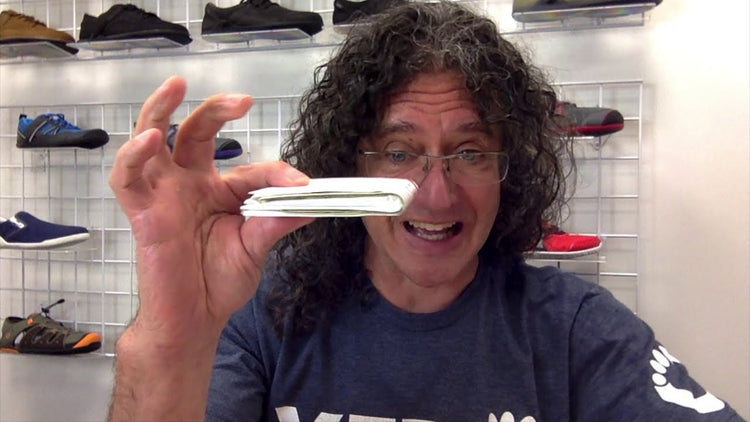
The video below shows you how to make your own Tyvek® wallet envelope in just a few minutes. Or download these FREE PLANS for The ULTIMATE DIY Minimalist Tyvek Envelope WalletWe can't wait to see your creation. A minimalist wallet to match your minimalist Xero Shoes ;-)
Raving about Xero Shoes in Wired.com

Raving about Xero Shoes in Wired.com

I have a small number of fantasies.One that I've had since 1993 is to be in Wired magazine.I've been a subscriber since issue #1 and, back in the 90s I was more actively involved in the tech world, which was Wired's domain.But as technology became more ubiquitous, Wired expanded its reach into more lifestyle-oriented content.So, given the "non-technology technology" of Xero Shoes, I hoped that, one day, they'd write about the value of natural movement.Well, that day is upon us!Scott Gilbertson just published a WONDERFUL article about his experiences in Xero Shoes titled "The Best Shoes I've Ever Worn Are Hardly Shoes at All"Click on that link and check it out. Add your comments here and on Wired.com.And if you want to see the shoes Scott raves about, click here for the Z-Trail sandal, and here for the HFS running shoe.

Running Form - learning from robots, kids, and ice

Running Form - learning from robots, kids, and ice

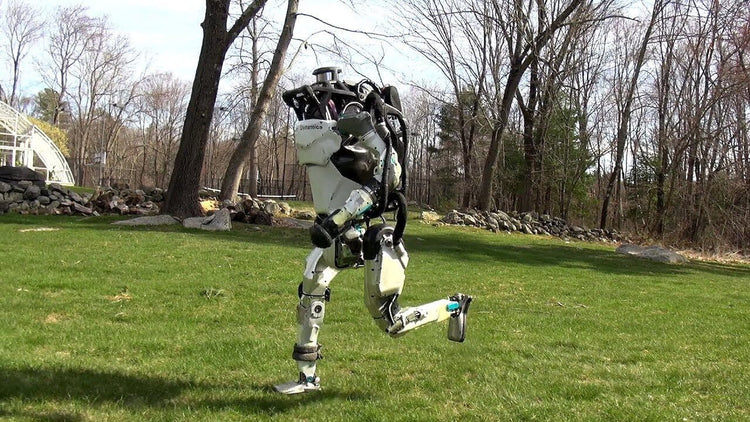
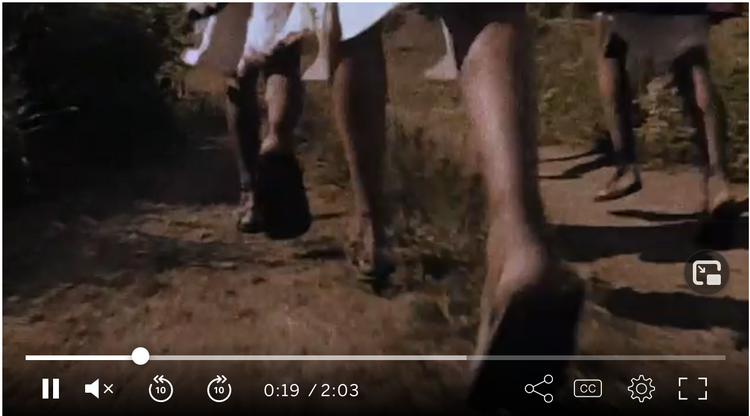
Physics. It's not just a good idea, it's the law.Want to improve your running technique?I have three suggestions: Watch robots run Watch little kids run Learn to run on ice! Running RobotsThe gang at Boston Dynamics are creating robots that do AMAZING things. For one, check out this one:Oh, sure, it's not going to win any races, but what do you notice about its running form?Look at where the foot lands in relation to the body.Is it reaching out in front of the body ("overstriding")? Nope.It's landing, basically, with the foot under the center of mass.This is the most important thing to emulate.You may also notice that this robot contacts the ground with its forefoot first. It doesn't land heel-first. It doesn't land flat footed.Research from Harvard's Dr. Irene Davis suggests that this is the optimal way for humans to land also. Why? Because you're putting the foot and ankle in the optimal position to give you strength, structure, and shock absorption.You know who else runs like this?KIDS!Especially kids who haven't spent much (or any) time in shoes.Take a look at this video. Especially the youngest, littlest kids at the back. Not every stride is perfect (nor should it be... they are, after all, on a non-flat surface), but you'll see that they're landing much like the way the robot does.Forefoot first. Foot under their center of mass.And, perhaps more importantly, it looks like they're having FUN!I also love when the littlest one stops for a few moments because he's "done," then starts again when he's ready to go.Running on Ice!I'm often asked how to run/walk/hike without slipping.Actually, what I'm asked is "Can you make a shoe or sandal that's totally slip resistant?"In short, No.Like I said at the start of this post: Physics is the law.There is no material that can prevent slipping under all conditions.Even the materials that help have limitations and trade-offs. For example, typically, the grippier the sole, the faster it wears out.But you can prevent slipping almost regardless of the sole's composition, or even the surface you're on.How?By doing the same thing that robots and little kids do: Land with your foot UNDER your center of mass (or as close as you can get).One demonstration of this is running on ice.Check out these two videos:In the first video, the runner builds to his full speed on carpet, then holds that speed on ice. In the second, the runner is even able to build speed with proper foot placement.This works because landing with your foot under your body reduces horizontal forces enough to eliminate slipping.A word about slipping in sandalsSometimes people will tell me that their sandal doesn't slip, but their foot slips across the sandal.This is caused by the same issue -- landing with your foot too far away from your body.In that case, the sandal hits the ground and stops while your foot is continuing to move.Landing with your foot under your body, like our kids, robots, and ice-runners, will take care of this, too. Let me know what you discover as you become a child-like robot on ice!  

Run and Walk Better with "Instant Biofeedback"

Run and Walk Better with "Instant Biofeedback"

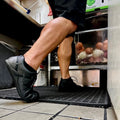
Why do experts say that if you want to learn to run naturally, or barefoot, you should start on a smooth, hard surface?(Hear Harvard's Dr. Irene Davis talk about this on the podcast she did with Dr. Peter Attia here)The answer: Because that's how you get the most feedback about your form... and feedback leads to change.In short, doing it wrong hurts and your brain figures out how to move your body differently to stop the pain.It just so happens, those gait changes that get rid of running pain lead you to using your muscles, ligaments and tendons as the natural shock absorbers and springs -- better than any cushioned running shoe.Those gait changes lead to what we think of an Natural Movement.But what if you're not a runner?What if you don't want to be barefoot?Well, Xero Shoes wearer and auto technician, Scott Hogan (@greasemonkeyfitness), accidentally discovered a SUPER elegant solution for giving you the feedback your brain needs to adjust to a more natural -- and comfortable -- way of moving.Check it out here:Try out Scott's idea and let me know what you experience in the comments below.

NEW research - Shoes can make you weak and injured

NEW research - Shoes can make you weak and injured

It's time for another episode of "stupid research."Not that the research itself is stupid.But that those of us who understand the value and benefits of natural movement, and how most "normal" shoes get in the way of letting your feet do what's natural, are stunned that people need research to prove something obvious:Using your body naturally is better than restricting it.In this episode, Harvard's Dr. Daniel Lieberman, whose research showing about how barefoot runners put less force through their joints than runners in shoes kicked off the barefoot running boom in 2009, just published a new study about footwear.And the results are not good for "normal" shoes.In this study published in Nature and described on the Harvard website and Lieberman and others examined the effect of "toe spring."Toe spring is the upward curve in a shoe, from the ball of the foot to the tip, that's built into modern athletic shoes and many dress shoes as well.Shoe designers add toe spring to stiff-soled shoes to accommodate the fact that the sole prevents your toes from bending towards your knee as your foot is about to push off the ground.So, what did they discover?In short:By limiting the amount of movement in the foot, the foot gets weaker: “It stands to reason that if the foot muscles have to do less work, then they’re probably going to have less endurance given that many thousands of times a day you push off on your toes,” said Lieberman, the Edwin M. Lerner II Professor of Biological Science and senior author on the paper. The work on toe springs is described in Scientific Reports. The researchers say this potential weakness could make people more susceptible to medical conditions like plantar fasciitis — a common, hard to repair, and painful inflammation of the thick, web-like band of tissue that connects the heel bone to the toes. And this limitation could lead to injuries and medical problems: The researchers say this potential weakness could make people more susceptible to medical conditions like plantar fasciitis — a common, hard to repair, and painful inflammation of the thick, web-like band of tissue that connects the heel bone to the toes. “One of the biggest problems in the world today of people’s feet is plantar fasciitis,” Lieberman said. “We think that what happens is that people are relying on their plantar fascia to do what muscles normally do. When you get weak muscles and the plantar fascia has to do more work, it’s not really evolved for that and so it gets inflamed.”    

The Science and Research of Minimalist Footwear and Natural Running

The Science and Research of Minimalist Footwear and Natural Running

"Where's the proof?"I'm asked this question often when I explain the benefits (and FUN) of natural movement, truly minimalist shoes and, whenever possible, barefoot living.Ironically, I never hear people asking that about footwear from "Big Shoe" even though the "modern" athletic shoe is the new kid on the block.It's only been about 50 years since the invention of the padded, motion-controlled, heel-elevated running shoe and there's no evidence that it's helped people reduce injury or even run faster.Well, if you want the proof about both points -- the problems that "normal" shoes have not solved and have probably caused, as well as the value of getting out of those shoes and into something like Xero Shoes, you'll love what I'm about to point you to.And if you know any skeptics -- people who INSIST that humans are better in whatever new form of cushioned shoe that's catching attention, pass this onto them.It's an interview by Dr. Peter Attia and the preeminent minimalist footwear researcher and clinician, Harvard's Dr. Irene Davis.Peter's been a big Xero Shoes fan for quite a while. I introduced him to Irene recently and here's the wonderful result:Click Here to listen to the podcastAnd, once you've listened, let me know what you think in the comments, below.

Eliud Kipchoge: It's NOT the shoes!

Eliud Kipchoge: It's NOT the shoes!

I'll admit it.I love being right.What am I right about this time?The importance -- or lack thereof -- of shoes in Eliud Kipchoge's sub-2-hour marathon performance.I've talked about how shoes were NOT the delimiting factor in Kipchoge's amazing run here, and in my podcast here, pointing out that the difference between his world record time of 2:01:38 in the Berlin marathon is only 4.58 seconds/mile slower than the sub-2, which was run with pacers, on a flat course (a.k.a. perfect conditions).Well, guess who agrees with me? KIPCHOGE!At Firstpost.com, sub-2-hour marathoner Eliud Kipchoge weighs in on how much of his success came from the Nike shoes he (and his pacers) wore for that event.The answer?Not as much as Nike or most commentators said.More specifically:“It is my legs that are still doing the running,” the Kenyan marathon runner told Firstpost in an email interaction when asked about the impact of his shoes in the eventual timing of 1:59:40 secs.Agreed.Running ~13 miles per hour for almost 2 hours is an AMAZING feat (pun intended).But the way his accomplishment has been reported is mostly about how the shoes allowed him to do this.And Kipchoge further downplays the role of shoes in his success:“Innovations are part of sport and always have been. With running, the effect of technology will always be minimal especially if you compare it to other sports.”Distance running coach, Dr. Phil Maffetone, thinks shoes DO matter, but not for the reason most people believe.In his book, "1:59 - The Sub-Two-Hour Marathon is Within Reach," Maffetone thinks the first person to run a sub-2 in a normal race will do so barefoot (I think his 2nd choice would be something like our Speed Force).Some day, I hope we have the resources to pick the world's best marathoner, support him (or her!) to train barefoot or in Xero Shoes, and show that lightweight (you can't get lighter than bare feet) and natural (hard to get more natural than Xero Shoes) will "let your legs do the running" to a sub-2.

Do You Need Arch Support? You Don’t. Here’s Why.

Do You Need Arch Support? You Don’t. Here’s Why.

This post was recently updated September 26, 2023I know that when I say “There is no support for arch support,” some people respond, “Yeah, but you sell  minimalist shoes with no support, so of course you would say that.”To those people I say, “You have the order backwards. I discovered the lack of support for arch support long before starting Xero Shoes.”In fact, it was that discovery – and how getting out of shoes with arch support – changed my life. And now with over 1.5 million people who’ve switched to Xero Shoes, they’ve discovered the same.But, there’s no need to take my word for it.“For years, I thought I needed to buy shoes that were cushioned and had arch support. Foolish me, I found Xero shoes and my life changed. I walk better, I feel better and I feel confident with my balance. Thank you!”Keep reading why you don’t need arch support in shoes. Why You Don’t Need Arch Support - Even if You Think You Do While you may think extra support helps, and it may even feel good, it actually may be causing problems that you didn’t anticipate. Problems that may not be affecting you now, but could in the future.Let me explain by starting with some simple questions. So simple, in fact, you may think I’m joking by even asking them.Here we go:1. Is weaker better than stronger?I’m betting you said No. Okay, so if stronger is better, then think about your biceps and here’s the next question:2. How do you make your biceps stronger?You’re probably thinking about doing curls, or some other sort of exercise, right?In short, USING your arm can make it stronger. Which brings us to the next question:3. How do you make your arm weaker?This is basic “use it or lose it.” Don’t use your arm and it gets weaker.Put your arm in a cast, and 8 weeks later it comes out weak and atrophied.Now let’s apply all of that to your feet.Think about shoes with stiff soles and arch support, or adding orthotics or other inserts.They don’t let your feet move. It’s like putting them in a cast.And while your feet may feel good because your muscles, ligaments and tendons are relaxing… your feet are getting weaker.Research from Katrina Protopapas and others showed that when healthy people added arch support to their shoes, their feet got up to 17% weaker in just 12 weeks.Imagine what that does over time.Here’s a question that’s not simple sounding, and the implications are HUGE for your health and wellbeing:What kind of problems could weak feet lead to?At the very least, it could keep your feet from feeling as good at the end of the day as they did at the beginning. Maybe you can’t do something as simple as walking across your floor in bare feet. Does that really sound “normal”?Or maybe, over time, when you get older, something even worse could happen when you have weak feet that can’t balance. I’m sure you can imagine.How to Solve the Weak Feet ProblemYou already know.Back to our arm analogy – Do you think that, once you get out of the cast, it’s worth spending a couple months doing exercises so you can then use your arm for the rest of your life… or would you rather keep it in a sling and never use it?Of course you do the exercises.You go back to the gym, but use a light weight for maybe one set of 10 reps of a biceps curl.Then, as you get stronger, you SLOWLY add more weight, or more reps, or more sets, based on the feedback from your body.Well, it’s the same thing to make your feet stronger.You could do an exercise program specifically designed to build foot strength.But, even if the program only took minutes a day, and you could  do it while watching TV, you might not do it.That’s okay, because there’s a better way.Research from Dr. Sarah Ridge showed that just walking in a “barefoot shoe” builds foot and arch strength as much as doing a foot exercise program.Frankly, walking in bare feet might be best, but that’s not practical for most people, most of the time.Xero Shoes makes casual and performance shoes, boots, and sandals that are all designed to be as close to barefoot as possible, plus the protection you might need, and style you’ll want.You could start slowly, by wearing a pair for 30-60 minutes. And, like going to the gym, add more time when your body tells you you’re ready.There’s no rush.Even if it takes a couple months to build up enough arch strength – so your arches are supporting you – that strength can serve you for the rest of your life.That strength can help you do the things you love – walk, run, hike, play sports, work out, you name it. Or maybe even help you do things you’ve never done before!By the way, Dr. Ridge says that Xero Shoes should give the same benefits of the shoes she used in her study.Here are some Xero Shoes best-sellers.Not sure which shoe is right for you. Take the Shoe Finder Quiz.Want More Proof? More Research about Arch Support?In case you’re still not sure, here’s more RESEARCH that backs up the idea that arch support — whether it’s built into the shoe, or added with an insole or orthotic, isn’t what it’s cracked up to be.And the independent shoe review site, RunRepeat.com, has just posted an article asking the question “Truth or Hype?” when it comes to supporting the arch.The synopsis is in the infographic from their site, below:I take issue with the recommendation that you should only use arch support if a podiatrist recommends it, given that most podiatrists don't know about this research and think, incorrectly, that you DO need arch support.So, I'd rewrite the recommendation to "recommended by a podiatrist who understands natural movement and knows that arch support is a temporary treatment for healing in most cases."By the way, my favorite part of the article on RunRepeat.com is actually the list of Best Rated Running Shoes on the right hand side.As of this writing, here's what that list shows... notice that THREE of the top 5 are Xero Shoes! (and I expect that the Speed Force will crack the Top 5, too):Closing Out: Why You Don’t Need Arch SupportShoes with no arch support allow your feet to move freely and naturally. Instead of relying on external support of shoes with arch, your feet strengthen naturally and become their own support system.Switching to a shoe that does not have arch support can take a bit of time, but your feet will thank you in the long run.

Abebe Bikila Runs Barefoot Wins Marathon

Abebe Bikila and his Barefoot Marathon Gold Medal

While the 2020 Tokyo Olympics are postponed until next year, now as great time to look back at one of the moments that helped shape the modern barefoot running movement.It was 60 years ago that Abebe Bikila won a gold medal in the Rome Olympics running in bare feet.A great article called OLYMPICS FLASHBACKS: THE SCIENCE OF BAREFOOT RUNNING AND WINNING GOLD shares the details, many of which people don't know.For one, Bikila didn't plan to run in bare feet.The shoes from his footwear sponsor gave him blisters so he decided not to wear them.The article also talks about how:In the past two decades, emerging research and Christopher McDougall's 2011 bestseller Born to Run kicked up a fiery debate about the merits of barefoot running. Some experts argue modern running shoes hamper humans' natural stride, while others say they are vital training tools to prevent injury and stabilize the foot.While there's no arguing that the debate is "fiery," when the barefoot vs. shoes conversation is presented, it's often done as if the two sides are evenly matched.They're not.There's no question that modern shoes affect people's stride. Research from Dr. Irene Davis at Harvard, and many others, repeatedly show this, and how shoes may even CAUSE the problems that they claim to cure or, at least, don't help the way most people expect after reading the promo material from the manufacturers.For example, when it comes to how well modern shoes "prevent injury," let's just look at Nike's new React Infinity Run.This shoe is marketed as "Designed to reduce injury" and "In an independent study, the shoe reduced injury rates by 50%."(I had a photo of their in-store marketing, but I can't find it :-( )Well, both are true... ish.Of course ALL modern performance shoes are designed to reduce injury. Nobody makes or sells a shoe that they know will cause MORE injuries.But the "independent" and "50%" are a bit of a red herring.The independent study was designed by and funded by Nike.The 50% injury reduction is a way of hiding the actual numbers -- over 30% of the runners in the 12-week study wearing Nike's best-selling, motion-controlled, padded, elevated heel, flared sole running shoe got injured, while "only" a bit over 14% got injured in the new shoe.Sure that's 50% better... but that's about 1 out of 7 who got injured in under 12 weeks.Think of it this way, which restaurant would you go to: The one that promises you'll only get food poisoning in one out of 3 meals, or the one who says only 1 out 7 will make you sick?Neither, of course!Back to the uneven debate -- When the "pro-barefoot" crowd makes their arguments, they can site studies to back up claims about reducing impact forces, reducing forces through the joints, etc.But the "anti-barefoot" side often cites "anti-barefoot studies" that, often, they paid for and that, often, are researching factors that are "straw men" (arguments that no barefooter ever made, like "barefoot running improves VO2Max").Using the example from the article about stabilizing the foot, it would be EASY to show a study that some shoe stabilizes the foot... IF that study existed."Of course one challenge in creating a study about stabilization is that the design elements used to "stabilize" the foot -- e.g. foam, typically -- break down over time.Plus, there is ZERO evidence that the foot typically needs to be stabilized. Pronation, for example, is not correlated to any injury.I was on a panel discussion at the American College of Sports Medicine, where a representative from Adidas said that while their goal is to reduce injury and improve performance, they had no data showing they could deliver these benefits because doing so would be time consuming, expensive, and have many confounding factors.Uh...If any major shoe brand could demonstrate scientifically that their shoe was better than that of another major shoe brand, that would be worth BILLIONS of dollars per year.To say that they haven't proven they can improve performance and reduce injury because "it's hard" is ludicrous.At best, what happens now is someone wins a race in a new shoe and other runners become so worried that the shoe may have been the causal factor in the win, and they all buy that shoe out of fear they're missing out on a competitive advantage. And then other shoe companies rush to make similar shoes out of the same fear!Look, it's true there isn't a study that proves that running naturally, either barefoot or in truly minimalist shoes, is better than being in shoes.But that IS because doing such a study is expensive and time consuming and has confounding factors -- all of which could be overcome, of course, with the kind of money that "pro-barefoot" companies like Xero Shoes simply don't have.And the question is, "Why haven't the big shoe companies funded that study?" If they did, and the study landed in their favor, it would shut up people like me, and the millions who've found that natural movement was helpful for them.But I've heard from executives at some of those "Big Shoe" companies who believe that natural movement IS better, but that they can't make shoes like Xero Shoes since that would be "against brand."Anyway, pardon the rant.Frankly, that was a tangent from the important bit: Read the article about Bikila. It's a great reminder of how what's possible is often much more than what we imagine (or are told).

Is Barefoot Best for Kids? Research says...

Is Barefoot Best for Kids? Research says...

This just in to the "I'm not surprised" department:A new study reveals children who are habitually barefoot show significantly different motor skills between the ages of 6-10 than those who are habitually shod. Researchers report those who are habitually barefoot have better balance and jumping skills.You can read the article here.I'm curious to hear what you see when you go to the article. Because, in the great irony that Internet advertising sometimes delivers, what I see when I go to an article recommending that kids be barefoot is an ad for one of the least barefoot shoe you can buy:HYSTERICAL.Now I know some people will read this and say, "But Steven, you sell kids shoes!"It's true. We do.But keep in mind these few things: We always say that "barefoot is best"... when appropriate (sometimes it's not, for various reasons) Most people will never spend the majority of their time fully barefoot We make our shoes, boots and sandals to give you the closest thing to a barefoot experience that you can have, given the constraints about "appropriate." For example, for those who aren't yet skilled enough and adapted enough to hike barefoot, we make trail shoes that are still lightweight, flexible, have wide toe boxes, and give you as much ground feel as possible while still giving you the protection and traction you currently need Give the above, we like to remind ourselves of something Harvard's Dr. Irene Davis has said that if kids grow up in footwear that lets their feet move and feel naturally, in 20 years we won't have adults who are being treated for the issues today's adults have. If your kids are spending more time barefoot or in minimalist footwear, what have you noticed about them compared to kids in constricting, padded, motion-controlled shoes (like that one in the ad I saw)?Let us know in the comments, below...

Xero Shoes Sponsors USA Artistic Swimming

Xero Shoes Sponsors USA Artistic Swimming

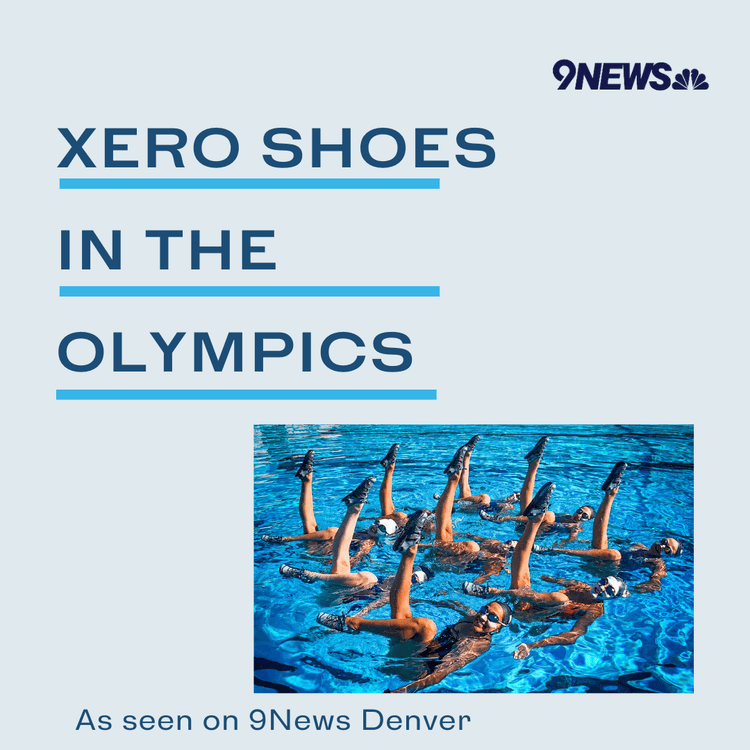
FOR IMMEDIATE RELEASEEmily Falkenberg | USAAS | emily@usaartisticswim.orgLaura Beachy | Xero Shoes | beachy@beachymedia.comUSA Artistic Swimming Announces Partnership with Xero ShoesCOLORADO SPRINGS, CO – (July 8, 2020) - USA Artistic Swimming signs Xero Shoes as its official footwear partner providing athletes innovative shoes that match the team’s style in the water. “They are not your conventional shoe, and we are not your conventional sport,” said USA Artistic Swimming CEO, Adam Andrasko. “We both embrace what is special about ourselves and use it in a positive way.”Established 41 years ago, USA Artistic Swimming officially rebranded from USA Synchronized Swimming in March. Artistic swimming is a women's Olympic discipline which combines technical perfection, synchronisation, choreography, artistry and expressive power. Athletes wear beautifully decorated swimsuits and waterproof make-up. They often perform choreography and use music that is unique to their heritage, creating a rich and distinctive spectacle.Xero Shoes’ lightweight footwear prides itself on minimalism and natural movement. Xero Shoes have sold hundreds of thousands of shoes, boots, and sandals to customers in 97 countries, ages 2-92, and will now be worn by the USA Artistic Swimming Senior National Team at every international competition. "We're so excited that USAAS asked us to support their incredible athletes and coaches,” said Steven Sashen, Xero Shoes CEO. “We are looking forward to having lots of fun together and helping the team reach their goals, feet first." About USA Artistic SwimmingUSA Artistic Swimming [USAAS] was established as a nonprofit organization in 1979 and is the United States national governing body for the sport. It is recognized by the International Olympic Committee, the United States Olympic Committee and FINA (Federation International de Natation Amateur) — the international governing federation. USAAS organizes, participates in, and promotes a variety of competitive events each year. These events begin at the local level and continue in the following categories: Age Group (12-19), Junior (15-18), Senior and Masters (20+). https://www.teamusa.org/USA-Artistic-SwimmingAbout Xero ShoesFeel The World, Inc. (dba Xero Shoes) of Broomfield, CO, manufactures Xero Shoes®, addictively comfortable, lightweight, performance and casual sandals and shoes built with a “foot-first” design. Durable, stylish and affordable — Xero Shoes supply the fun and benefits of natural, barefoot-inspired movement with a layer of protection and comfort. FTWI launched in December 2009 and now has customers ages 2 to 92, in 97 countries who wear Xero Shoes for walking, hiking, yoga and gym-going, CrossFit, kayaking, rafting, paddle boarding, jogging, and even running hundred-mile ultra marathons. www.xeroshoes.com  

How to find TRULY comfortable shoes

How to find TRULY comfortable shoes

The secret to finding comfortable shoes...It's probably not what you think.And it's definitely not what "Big Shoe" companies have been saying for the last 50 years.It's not because you need more arch support or better cushioning or to control your pronation or supination.The secret is actually what humans have been doing for ages.The secret to TRUE comfort is letting your feet do what's NATURAL.Think about this -- did you know 1/4 of the bones and joints of your ENTIRE body are in your feet and ankles?Did you know you have more nerve endings in your soles than anywhere but your fingertips or lips?CLEARLY, you're supposed to USE those things at the end of your legs.Your feet are made to bend and flex and move and FEEL the world (you'll want to do that safely, and I'll show you how).And it gets worse >> When your feet can't do their job, that function of helping you move and balance tries - UNSUCCESSFULLY -- to move "upstream" into your ankle, your knee, your hip, and your back.You want to let your feet do their job, so the rest of your body can do its job.But most shoes do the opposite of what's natural -- they squeeze your toes together, they elevate your heel (which messes with your posture), they insulate you from the ground so your brain can't tell what's going on with your feet (which means it doesn't have the info it needs to help you move your body efficiently and enjoyably).And NO amount of cushioning protects you from the impact of walking or running, or even just standing.ANOTHER QUESTION -- Remember being a kid on a warm summer day and going outside, kicking off your shoes, and feeling the grass between your toes, or the sand under your feet, or the water around your ankles?Remember how much fun it was to PLAY... until it got so dark your parents had to drag you home, even though you couldn't see your hand in front of your face or the ball you were trying to kick or hit?You can have that feeling of fun and freedom NOW... at any age.It comes from letting your feet do what's natural.Now, I'm NOT suggesting you run around barefoot like some aging hippy (I know that's what I look like, but my wife said she'd leave me if I cut my hair!)Once my wife and I discovered the fun and the benefits of natural movement, we started Xero Shoes to make footwear that LETS YOUR FEET BE FEET: - Natural Fit -- wide toe boxes let your toes spread and relax. A non-elevated (zero-drop) heel for proper posture. - Natural Motion -- super flexible to let your feet bend and move naturally. Low-to-the-ground for balance and agility. - Natural Feel -- the patented FeelTrue® soles give you just-right protection while still giving the ground feedback your brain needs for efficient, natural movement. All our casual and performance shoes, boots and sandals are super lightweight. They're made for almost any activity you do -- walk, run, hike, workout, do yoga or CrossFit, or even just stand on your feet all day for work.They're so comfortable that at the end of the day you may forget to take them off!We've had people email us to say, "I got into bed and then realized I was still wearing my Xero Shoes!"Plus they're affordable and so durable that they have a 5,000 mile sole warranty.Oh, and yes, we WERE on Shark Tank ;-)We've helped hundreds of thousands of people discover the fun, comfort, and benefits of natural movement and we hope you decide to do the same.Go to https://xeroshoes.com/shop/ to see which styles have your name on them. Check out the reviews (over 17,353 5-star reviews!), and get ready to Live Life Feet First!(And if you have any questions, our Customer Happiness Team is available to help -- 303.447.3100 or support@xeroshoes.com)