The Xero Blog

The Shoes Powering Isaiah Stewart in the Playoffs

The Shoes Powering Isaiah Stewart in the Playoffs

When Isaiah Stewart takes the floor in the playoffs, he's not wearing the usual names you'd expect to see on an NBA court. What most people don't know is that he's been doing it in a minimalist shoe that most of the league wouldn't dare try. He's playing in Xero Shoes X1, the barefoot basketball shoe built on the belief that less is more.  "I feel like I’m gaining a lot by switching from a standard basketball shoe. I feel very grounded. I play with a lot of force, strength and power, and the Xero X1 shoes allow me to function like the human body should." For the playoffs, you'll spot Isaiah in his exclusive Warrior Red colorway, designed in collaboration with Xero Shoes' product team. It pulls from his mindset: aggressive, relentless, fearless. It's built for players who go all in. Pat Benson of Sports Illustrated interviewed Isaiah at the beginning of the season to learn more on why he made the switch. Read more: Isaiah Stewart Stays Ten Toes Down in Barefoot Basketball Shoes Do Minimalist Shoes Work for Basketball? The instinct for athletes sometimes is about "going bigger" — more cushion, more support, more tech. Stewart went the other direction, and the X1 was engineered to back that decision up at the highest level: Lightweight Power Pilot testing indicated the X1 may generate higher peak ground reaction forces than traditional basketball shoes — translating to more powerful jumps, faster acceleration, and superior energy transfer from floor to foot. When Stewart says he plays with force, this is part of why.  Court Grip A multidirectional traction pattern supports lightning-fast direction changes and quicker reactions. On a playoff court where every half-step matters, that kind of grip isn't a nice-to-have — it's a difference-maker. Balance & Control A zero-drop sole keeps you balanced and connected to the floor, improving stability, ground awareness, and proprioception. Every move feels intentional. Every cut, every post-up, every closeout — responsive and grounded. Making the Switch: Isaiah's Tip "Transition is different for everyone. I started by walking barefoot and wearing barefoot shoes, plus I did foot exercises. So, when I made the transition to the Xero X1 basketball shoes, it felt natural to engage my feet and feel them function like they should."  
Read More The Shoes Powering Isaiah Stewart in the Playoffs
Genesis DIY Sandal Kit: Customize Your Own Barefoot Sandals

Genesis DIY Sandal Kit: Customize Your Own Barefoot Sandals

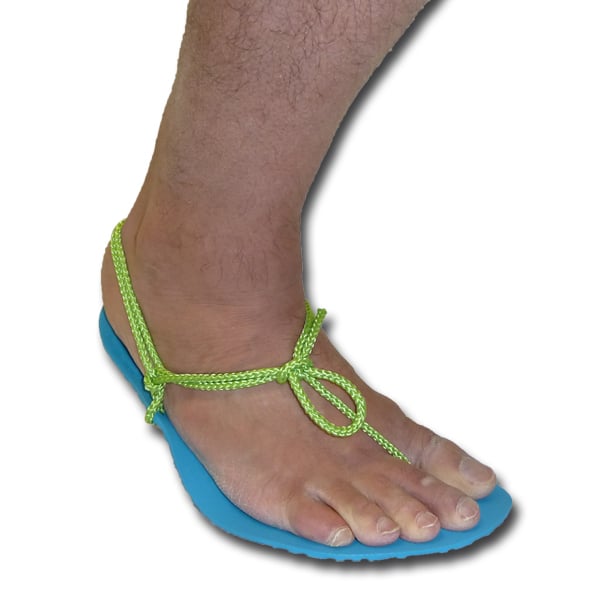
You asked. So we brought it back. The Genesis DIY Sandal Kit returns to where it all began — a simple, handmade solution that grew into something bigger. When we paused the DIY kit during our Shopify migration in October 2025, we didn’t expect much reaction. We were wrong. You kept asking for it — again and again. What started as our original product is still one of the most meaningful. That’s why it’s back, and why we’re calling it what it is: the Genesis DIY Sandal Kit. The Origin Story Before Xero Shoes was a brand, it was a solution. Back in 2009, founders Steven Sashen and Lena Phoenix weren’t trying to build a company — they were solving a personal problem. Steven was a Master’s All American Sprinter, but his training was regularly sidelined by injury. Inspired by Born to Run, Steven tried running barefoot and felt an immediate difference.  You can’t be barefoot all the time, so that’s when he tried making his own huaraches, same sandals worn by the Tarahumara tribe in Born to Run. Others in his run club wanted a pair, too. What started with friends in Boulder quickly spread. People weren’t just wearing the sandals — they were making them. Choosing their own cords. Experimenting with tying methods. Creating something uniquely theirs. Everything was done by hand. Steven and Lena turned the living room into the workspace. They sourced cord and rubber from hardware stores and shipped kits from the local post office. That’s when it became clear: this wasn’t just a sandal. It was a different way to think about footwear. The DIY Kits built a quiet, cult following among barefoot runners, minimalist hikers and conscious consumers. Over time, the design showed up in unexpected places — including Australia Fashion Week in 2023, and across fashion and culture in 2024 and 2025 as minimal, functional sandals re-emerged. But this isn’t about trend cycles. The Genesis DIY Sandal Kit is the origin of everything we do. Pictured below is Steven and Lena with more than 500 orders (2013). Re-Introducing the Genesis DIY Sandal Kit This is the starting point. The Genesis DIY Sandal Kit strips things back to what matters: a thin, flexible sole and a durable cord system. No unnecessary structure. No overbuilt features. Just what you need to move naturally. It’s simple by design — and that simplicity is intentional. But what makes this different isn’t just how it feels. It’s how you experience it. You don’t just open a box and put something on. You open a box and start creating. You choose the look. You control the fit. You shape the final result with your own hands. That’s what this kit offers: A hands-on, customizable design A sense of ownership and craftsmanship A simple, approachable process from start to finish Because this isn’t just something you wear. It’s something you make How to Make Your Genesis DIY Sandals Ready to create your own customized sandal? Everything you need to build your sandals is included—plus a few simple tools you likely already have at home. Your Genesis DIY Sandal Kit comes with the following:  CordChoose from 18 different colors. The 100% polyester cord is soft, durable, water-resistant, and designed to hold its color over time. Want to switch up your look later? You can grab additional cord options here. FeelTrue Outsole Pick between Black or Mocha Earth, with two thickness options: 4mm or 6mm. Both give you a close-to-the-ground feel while still protecting your feet. (For reference, our Genesis sandal is 5.5mm.) Hole Punch Used to create the toe hole for your custom fit. You’ll also need a few basic tools (not included): Hammer Lighter Magazine or thick paper (to protect your surface while punching the hole) Optional: pliers, bobby pin, or lacing tool for easier threading The video below provides a visual, or you can also follow the step-by-step written instructions. Prep Your Sandals Step 1: Find Your Size Before buying your sandals, determine your foot length (you’ll select from options A–K). Place a blank piece of paper on the ground against a wall Stand with your heel touching the wall Mark your longest toe Measure heel to toe with a ruler Choose the closest size. Step 2: Mark Your Toe Hole Placement Now it’s time to customize your fit. Place your foot on the sole and mark a spot about ¼ inch in front of the webbing between your big toe and second toe. Prefer a slightly different feel? You can shift the hole slightly toward your second toe. Step 3: Punch the Toe Hole Place the sole on a magazine or thick surface. Hold the punch straight (perpendicular) to the rubber. Use a hammer to punch your hole. Depending on the 4mm or 6mm outsole, you may need to do a few whacks to punch through the rubber. Note: The 6mm sole may require a few extra hits. Step 4: Create a Stopper Knot Before lacing, you’ll need a stopper so the cord doesn’t pull through the toe hole. You have two options: Option A: The Figure-Eight Knot Form the knot: Take the end of your lace, go over the top, wrap it around, and pull it back through the loop you created. Flatten it: As you pull tight, shape the knot with your fingers to keep it as flat as possible so it won’t bunch up under your foot. Seal the knot: Briefly apply a lighter's flame to seal the knot without burning it. While warm, press it flat with your fingers or a pair of pliers. Option B: The Melted Lace Bead (For polyester or nylon laces only) Fray the end: Shred or fray the end of your lace. If your lace has a metallic reflective tracer, cut it off first, as it burns at dangerous temperatures. Melt the bead: Carefully use a lighter to melt the frayed ends into a bead. Try to avoid letting it catch fire, though it may happen. Shape and cool: Immediately press the melted end firmly onto a metal tool, like pliers, to flatten it. Let it cool and harden completely for about a minute. Step 5: Make Threading Easier Getting the cord through the holes can be tricky. Try one of these: Melt a firm tip: Heat the end of the lace with a lighter (do not burn it) and press it with your fingers to form a firm, plastic-like tip that pushes easily through the rubber hole. Remove the core: If the lace is still too thick, pull the inner core out by about half an inch and cut it off. Stretch the outer lace back over the empty space, heat it, and pinch it into a smaller, firmer point to push through. Use a hairpin tool: Feed the lace through the looped end of the included hairpin lacing tool. Push the two prongs of the hairpin through the sole's hole, and use pliers to grip and pull the pin (and the lace) completely through. Now you’re ready to actually lace your sandals! Lacing Your Genesis DIY Sandals In this video, you can see how a little bit of handiwork and creativity turns into your own unique sandals from our Genesis DIY Sandal Kit. Don’t worry, it’s easier than it looks! Step 1: Thread the cord through the toe hole Insert the cord through the toe hole from bottom to top. The knot should be on the bottom of the sole. Step 2: Thread the cord through the outside ankle hole Bring the cord to the outside ankle hole and thread it from top to bottom. Bring the cord toward the front of the sandal, then loop it underneath and back around to create a loop around the outside ankle hole. Step 3: Run the cord across the heel Take the cord across the back of the sandal where your heel strap will sit. Step 4: Thread the cord through the inside ankle hole Thread the cord through the inside ankle hole from top to bottom. This time, loop the cord from the back to the front to create a loop around the inside ankle hole. Step 5: Tie the main knot Starting with the cord coming from the inside ankle hole: Loop it over and then under the top cord coming from the toe hole. Then loop it over the inside ankle loop and over the outside ankle loop. Thread the cord through the triangle-shaped opening created by the cords. Pull tight. This secures the main structure of the sandal. Step 6: Create a second cord pass.  To create the double-cord design: From the center knot, bring the cord down toward the inside ankle loop. Loop it under the top cord. Then bring it over the cord that forms the heel backing. This creates a locking wrap that helps hold the strap in place. Step 7: Lace around the heel Bring the cord around the back of the heel: Loop it under the outside ankle loop Then under the lower heel cord Then over the top cord coming from the toe post At this point, you should see two even lines of cord running from the center huarache knot, around the ankles, and across the heel. Step 8: Finish the final knot Slip the sandal on your foot before tying the final knot and trimming excess cord. To secure everything: Slightly loosen the center knot Thread the cord through once more Pull tight to lock it into place Trim off remaining cord Step 9: Adjusting the fit The final step is all about personal preference. Adjust until the sandal feels secure and comfortable on your foot.   Everyone will have their own preference for the final fit for the knot placement, cord tension and footbed.  Knot Placement: Adjust top knot to what feels right – closer to your toes or further back to your shin. Cord Tension: You’ll want the cord to feel snug but comfy, likely fitting a finger or two under the cord.  If your sandals feel too loose, the footbed can move around under your foot or the cord can rub your foot. Footbed: You can trim the footbed with a pair of scissors to better fit the shape of your foot. Ensure there are a few millimeters of rubber in front of your longest toe and behind your heel. Once the fit feels right, you do not need to untie the knot each time. You can simply slip the heel strap on and off. You’ve done it! We can’t wait to see what you design! Tag us @xeroshoes to show off your style.  
Read More Genesis DIY Sandal Kit: Customize Your Own Barefoot Sandals
What are Zero-Drop Shoes?

What are Zero-Drop Shoes?

You may have heard of the term, “zero-drop” as it relates to our shoes. But what exactly does it mean?  Zero-drop simply means your heel and forefoot are at the same height. If you’re standing barefoot on flat ground, this is your body’s natural position—balanced, aligned, and stable. Now compare that to most modern shoes. "Zero Drop" is not just a footwear industry term anymore. It’s an essential part of Xero Shoes’ barefoot DNA.  In this blog, we’ll break down what zero-drop shoes are, how they compare to traditional footwear, and why they’re a key part of natural movement. What Is “Heel Drop” in Shoes? Most traditional shoes are built with an elevated heel, meaning your heel sits higher than the ball of your foot. This design was originally intended to cushion impact in runners. But here’s the catch: That elevated heel can subtly shifts your body forward and changes how your body moves. That’s why a non-negotiable with barefoot shoes is a zero-drop design. Having your entire foot from heel-to-toe in one plane allows for natural movement. A barefoot shoe’s thin, flexible sole allows your feet and toes to bend and flex.  Zero-Drop vs. Traditional Shoes Here’s the simplest way to think about it: Traditional Shoes: Elevated heel (positive drop) Thick cushioning Stiff structureToe spring (toes pushed upward) Barefoot Shoes (like Xero Shoes): Zero-drop (level from heel to toe) Thin sole for ground feedback Flexible so your foot can move naturally Foot-shaped design for natural toe splay The Big Misconception About Zero-Drop You may have seen many footwear brands promoting “zero-drop” shoes. Sounds like a step in the right direction, right? Sometimes. But not always. Here’s where things get misleading. Not all zero-drop shoes are barefoot shoes. Not all zero-drop shoes promote natural movement. Some shoes are labeled “zero-drop,” but still: Have added cushioning that limits groundfeel Feature stiff soles that limit natural movement Include toe spring (where your toes are pushed upward unnaturally) So while the heel height might be level, the overall experience is still far from barefoot. Zero-drop alone doesn’t equal natural movement. What Actually Makes a Shoe “Barefoot” If a shoe truly supports natural movement, it’s not just about drop. It’s about the full package: Zero-drop (level heel and forefoot) Thin sole for ground feedback Foot-shaped design so your toes can spread naturally Flexibility so your foot can move naturally No forced arch support Miss one of these, and you’re not really getting the benefits people associate with barefoot shoes. We design Xero Shoes to be minimal to the max: Everything you need to optimize your body’s natural movement. Nothing you don’t. Why This Matters for You It’s easy to get caught up in labels like “zero-drop” or “minimalist.” But the real question is: Does the shoe let your foot move the way it’s designed to?That’s what actually matters. When your footwear works with your body instead of against it: Movement feels more natural Your feet can function the way they’re supposed to And comfort comes from alignment—not artificial support Or put simply: The goal isn’t just a flatter shoe. It’s a freer foot.
Read More What are Zero-Drop Shoes?

latest News

Placeholder Image - Xero Shoes

Dan Lieberman on Running Form

Harvard's Daniel Lieberman is one of the stars in Chris McDougall's book, Born To Run. In the book, Chris describes Dr. Lieberman's anthropological theory that humans ability to run long distances (while maintaining their body temperature) allowed us to chase down animals that, for short distances, are much faster than we are. He also details Lieberman's research into running mechanics and running form, including the famous study that demonstrated how barefoot running puts less force through your joints and can be better/safer for you.Well, thanks to Pete Larson at www.runblogger.com (who turned me onto the following video), and thanks to Tuck at http://yelling-stop.blogspot.com/ (from whom Pete found it), I'm happy to share this video of Dan sharing his top 5 tips for better running.All I would add (and I'm about to release something that describes this) is that "Don't overdo it" isn't a useful message, because the only way you know if you've over-done it, is when you've done too much and it's over! ;-)In other words, better to come up with a plan for what you ARE going to do, rather than make an admonition about what you shouldn't do, since us humans are as bad at following "don't do this" rules as we may be as good at chasing down an antelope.

Placeholder Image - Xero Shoes

See, Barefoot Running is NOT Bad for You

The media is an interesting thing. One day, they love you, the next day they hate you. As long as there's controversy, they're interested... ish. The last time barefoot running made all the news it was when the University of Colorado study (done right up the hill from me) apparently showed that barefoot running was less efficient than running in shoes (see my analysis of that study here). In fact, when that study got published, the media went crazy, practically insisting that this was the death knell for those of us who run unshod. So, I'm not sure what it means that they've basically ignored a new study from Northumbria University that shows the exact opposite! Why are there no crazed headlines about how running without shoes really IS the greatest thing since bread, the slicer, and the sliced bread that comes from intelligently combining the two? Who knows. Who cares. More importantly, check out the info about the study here at ScienceDaily.com In short, if you want the synopsis: Runners used 6% more energy when they wore shoes. Here's the line I like: The results suggest that, by ditching their trainers, athletes new to barefoot running adopt a running style similar to experienced barefoot runners and enjoy an immediate and likely beneficial increase in running economy. Works for me (in fact it DID work for me!)
Placeholder Image - Xero Shoes

Vibrating insoles, bare feet, and balance

The Wall Street Journal online published an article describing the research of James Collins from Harvard. James wondered why people get less steady on their feet as they get older.His conclusion: They get less feedback from the ground and lose the ability to balance.So far so good.His solution: An insole that provides random vibration to stimulate the nerves in the feet.Can anyone here think of another way of doing the same thing, but without all the electronic bells and whistles? Anyone? Beuler? Beuler?If you said, "Take off your shoes!" you win any prize on the second row!If you said "Take off your shoes! And if you don't want to step on unpleasant things, wear Xero Shoes!" you get a prize from the TOP row! ;-)If you think about this, it sheds light on another bit of research on balance and the elderly: Studies have shown that Tai Chi can help elderly people regain their balance. But it's probably not the Tai Chi that's causing the effect (BTW, I have nothing against Tai Chi... I did it and taught it for years). It's the time spent barefoot, FEELING the ground.I hope that someone does a study with Xero Shoes and balance sometime. I'd place a bet on the outcome.The content of this post does not constitute and is not intended to be a substitute for professional medical advice, diagnosis or treatment. Always seek the advice of a physician or other qualified health provider with any questions or concerns you may have about your health or a medical condition.

Placeholder Image - Xero Shoes

Barefoot Running... The Movie!

I know many of you are eagerly waiting for the Born To Run movie (I am, too).Well, until that's out at your local gajillion-plex, check out this trailer of the new barefoot running movie by Michael Sandler and Jessie Lee, authors of Barefoot Running.I'm forever grateful to Michael and Jessie... when I decided to try running barefoot as a way to deal with my persistent running injuries, I was fortunate enough that they were teaching a workshop that very weekend, right in my backyard (metaphorically speaking... it was 3 miles away).Even more, after my first barefoot run, when I said to Michael, "Well, that was interesting, but I'm a sprinter, not a long, slow distance guy," he encouraged me to try it a few more times and, for some reason, I did.Then, Jessie, being a former sprinter herself, added a whole other level of fun when we would take off across some field, leaving the LSD runners in the dust ;-)Oh, and it was Michael saying, "If you had a website for these sandals you're making, I'd put you in our new book," that was the beginning of Xero Shoes!If you watch this trailer and don't want to book a ticket for the workshop where Michael and Jessie take you to all of these amazing locations, then there's something wrong with you (or you already live in Hawaii).I've seen clips from the entire movie and it's really something special. Enjoy.

Placeholder Image - Xero Shoes

How to think like a shoe company

You know the saying "when all you have is a hammer, everything looks like a nail"?Well, it's true for shoe companies, too. When all you have is padding and motion-control, everything looks like it pronates and lands too hard!Check out this video about the "secret" Adidas development center. Especially watch at the 2:10 mark where the "best people in the world" analyze Ben's sprinting gait and conclude:a) That he pronates and heel-strikes (NOTE: He over pronates BECAUSE he heel-strikes since, when you land on your heel, the ankle muscles can't can hold the foot/ankle/lower leg in place).b) The solution: Making a shoe with padding and motion control!Uh...First of all, if you heel strike when you sprint, you are not sprinting! Sprinters do not heel strike. And when you land on your forefoot or midfoot, the entire musculature of the lower leg, ankle, and foot, can be "pre-loaded" and engage when you land.The cure for Ben is to STOP HEEL STRIKING, not get a shoe that lets him continue to run incorrectly. Duh.My next comment falls into the "maybe it's just me" category: Notice how large, spacious and expensive this place is. Ben mentions that Adidas does over a BILLION euros in sales.Look, I'm the last guy to deny any company the right to make money, and I'd love to have a billion dollar company.But am I the only one who sees a direct connection between a massive, pricey research lab and shoes that cost $150-200, and "hi-tech" shirts that cost $100+. This is like a thought I had at the Outdoor Retailer trade show, where some of the bigger companies have booths that easily cost over $1,000,000, "Oh, now I know why they charge so much for their products! They need to support the booth."Honestly, I find it unlikely that the "amazing" research they're doing actually pays for itself. I think it makes them feel good about themselves, and makes naive reporters think, "Oh, wow, they're doing something really special here."I don't doubt for a second that they could drop the price of their shoes to something more reasonable, not waste money on "research" that's iffy at best, and still make the same profit.Again, maybe that's just me.The content of this post does not constitute and is not intended to be a substitute for professional medical advice, diagnosis or treatment. Always seek the advice of a physician or other qualified health provider with any questions or concerns you may have about your health or a medical condition.

Placeholder Image - Xero Shoes

Run in Peace, Micah True

There's no way to adequately thank one of the great inspirations in the running world, Micah True, also known as Caballo Blanco ("White Horse"), who was found dead just hours ago. Micah, arguably the "star" of Christopher McDougall's best seller, Born To Run, went out for a run on Tuesday and did not return. There's no news at this moment about a cause of death.As Micah would often say in signing off, "Run Free!"Run In Peace, Micah.

Placeholder Image - Xero Shoes

University of Colorado Barefoot Running Study

 The media is having an anti-barefoot running field day thanks to a study published by some people right up the street from me at the University of Colorado (BTW, I've been living in Boulder for 19 years and nobody has been able to explain why they call the university CU instead of UC.).Each of the dozens of articles about the study has a distinct flavor of elementary school playground taunting, "Nah, nah, nah, nah, boo, boo… barefoot running isn't good for you!"I mean, check out some of the headlines: Debunking the Barefoot Running Myth - Sydney Morning Herald (barefoot running isn't like bigfoot!) Here's Proof Barefoot Isn't Better -- Running Times (Ha! So there!)It almost feels like the press is enjoying creating a backlash to all the "pro" barefoot articles of the last two years, even though in every barefoot article I've read the media insists on publishing "both sides of the story," and includes some doctor who's never run a meter in bare feet and wouldn't know decent barefoot running form if it ran him over, claiming that running without shoes will hurt you, bring shame on your family, and accelerate the coming apocalypse.So, let's take a deep belly breath or two and have a chat about the study. In fact, let's start by talking about studies, in general:Designing a biomechanics study is not easy. Aside from deciding exactly what you want to explore and the best design of the study itself (how you can test it), finding enough of the right kind of participants is often tricky, if not impossible.It's even more difficult to design a study that isn't artificial in some way. That is, it's showing effects in a lab that may not be relevant in the real world.And, even more, many studies, while interesting, may not be relevant to the broader population. (Whenever someone quotes a study, or even just the habits, of elite marathoners, I respond "Unless you're 5'5" and weigh 105 pounds and run at 13 miles per hour for two hours... WHO CARES what those guys do?)Finally, the way the media picks up a study -- this one or any of the previous barefoot studies -- often adds some spin that isn't in the actual study.All of the issues I just raised are relevant as we take a gander at the CU study. BTW, if you want to see a lively and cogent critical look at the study, you can't go wrong with reading the comments on the New York Times article about it. Frankly, this post probably won't be as lucid as some of the comments there.Okay, let's jump into it… The gist of the study:"In the study, 12 subjects with substantial barefoot running experience ran at 7.5 MPH with a mid-foot strike pattern on a motorized treadmill, both barefoot and in lightweight cushioned shoes (~150 g/shoe, 5.4 oz). In additional trials, they attached small lead strips to each foot/shoe (~150, ~300, ~450 g). For each condition, they measured the subjects’ rates of oxygen consumption and carbon dioxide production as an index of metabolic cost.”And the results:a) For every 100g (3.5oz) (the average weight of a deck of playing cards) added per foot, energy cost increases by approximately 1% whether running barefoot or shod.b) Running barefoot and in lightweight shoes do not significantly differ in energy cost.c) When controlling for shoe/foot mass, running in lightweight shoes requires ~3-4% less energy than running barefoot."Now, let the fun begin. Can you find the "confounds" (the factors in the study that might affect the results, or the interpretation of the results)?I'll start. Let me know if you find more.1) How did they determine that the 12 subjects had "substantial barefoot experience?" Well, the study says, “8 km/week barefoot or in minimal running footwear (e.g. Vibram Five Fingers) for at least 3 months out of the last year.”Does 3 months out of the last 12 really equal "substantial?" I've been barefoot for 3 years, and I'm STILL improving my form.And if that three months was wearing VFFs or minimalist shoes, that counts as "barefoot experience" Uh…As I've commented, and as the American Council on Exercise showed, and as Pete Larsen from www.runblogger.com captured on video: VFFs are not the same as barefoot.Now the researchers did verify that the subjects all ran with a "midfoot or forefoot" landing. I know that Lee Saxby, the spokesman and coach from Vivobarefoot would have an issue with that. He doesn't think midfoot is proper barefoot form (there's some debate about that, but it's besides the point at the moment).2) They ran on a treadmill. Look, I get that testing runners on an actual track is hard and expensive, but running on a treadmill is not the same as running on the ground, end of story. It may give some useful data, but if it walks like a duck and quacks like a duck, but the duck is on a treadmill… hmmm, that analogy isn't quite working, but you know what I mean.I did some high-speed video analysis of my running at the Monfort Human Performance Lab. I hit 21 mph on that treadmill. I can tell you that when I'm on a treadmill, my stride is different than on the track. I overstride so I can "catch" the treadmill belt, for example.3) To simulate a running shoe's weight, the researchers put lead weights on the top surface of the runners' feet. Do you think some small weights pressing down on your foot is different than having that same amount of weight distributed evenly, and mostly under your foot, thanks to the design of the shoe? I do. Does that matter? Could be. Is there a way to check… not easily.4) The runners were at 7.5 miles per hour. That's slow for an elite runner --  about 200 meters in a minute, a quarter mile in 2 minutes, a mile in 8 minutes -- but fast for most casual runners. This raises a few questions:a) How was that pace compared to the runners' usual training pace? b) Does speed make a difference? c) What about turnover, or cadence? Were those controlled and the same when the runners were barefoot vs. shod?Got me. But, suffice it to say, we're seeing the artificial quality of the study.5) Oh, this wasn't mentioned above, but I'll give it to you now: the runners were wearing yoga socks. "“For the duration of the experiment, subjects wore very thin, slip-resistant yoga socks for safety and hygienic purposes.”Hygienic purposes? Uh, some 409 and a paper towel would handle any "hygiene issues." And "safety"? If you read the study, one aspect of "safety" is "avoiding blisters."Boy, where to start on that one? We know that socks does not equal barefoot, and we also know that if you get blisters when you run barefoot, you're doing something wrong. So, this brings us back to number 1 -- how experienced were these runners really?6) The study measured oxygen consumption and carbon dioxide production. Okay, that's a fine way to measure efficiency, based on the idea that using less oxygen and producing less CO2 means you're using less effort, and that equals being more efficient.But here's a question: So what?For one: does using less energy equate to faster times? It seems like it might, but that's not a given.Does the amount of extra energy being used by *some* of the barefoot runners have any relevance to the average runner? Someone for whom 7.5 mph is too fast… or even too slow?7) Oh, here's a favorite. The runners in the study wore an ultra-lighweight racing flat. Most runners wouldn't wear those. And most runners with no barefoot experience wouldn't find those any friendlier than being shoe-free.8) One other thing: A hallmark of the scientific method is reproducibility. Just because one lab gets a result, that doesn't mean the question is resolved. When a study is reproduced in independent labs and the same (or very similar) result is obtained... then you know you've got something.What if the study is correct, though? What if barefoot running is less efficient than shod running?The only answer I can come up with is: Who cares?I don't mean that it's not important to know. I mean, literally, who should care?If you never race, you'll never notice any difference in efficiency (assuming, again that "decreased efficiency" = slower times).Besides, there are MANY other reasons to run with bare feet than the idea that it's more efficient... many that have barely been touched on (Dr. Michael Merzenich and I have had some interesting chats about how being barefoot could help the elderly in various ways). Personally, I didn't make the switch for efficiency's sake. In fact,  for me, as a sprinter, I know I'm more effective in spikes than barefoot. I switched because it helped me correct some form problems, eliminated injuries I was getting, turned running from a chore into an enthralling discovery, and, more importantly... WAS FUN.Don't get me wrong, I'm thrilled that my Boulder neighbors are researching barefoot running. And while this is the first published study, I know they have more coming and I'm looking forward to those.And I'm certainly not blaming them for how the media is handling the story.My only interest is the continued exploration, conversation, and understanding of efficient movement, running for speed and/or distance, and the ways of teaching and exploring barefoot running (and walking and hiking).No one study can perfectly address all of the open questions. But the almost combative attitude where everyone wants to jump on some one-sided "We're better!" bandwagon certainly doesn't help.Suffice it to say, this study is not the death knell of barefoot running that many media outlets are portraying it to be (because, you know, controversy is more important than truth if you're trying to sell papers).Now, if you'll pardon me, I have to burn off some of my frustration by putting on some yoga socks and minimalist shoes and going for a barefoot run.p.s. (added on 4/4/2012):I just realized that the conclusion of the study was WAY off base!Here's whyThe researchers think that the improved efficiency of the shoes came from the PADDING absorbing some of the stress that the muscles have to handle when you're barefoot.In other words, the ENTIRE efficiency effect could be ALL about the padding and have nothing to do with weight. The weight issue would only be valid if they tested multiple shoes of the same weight with different types of padded outsoles and got the same results.The content of this post does not constitute and is not intended to be a substitute for professional medical advice, diagnosis or treatment. Always seek the advice of a physician or other qualified health provider with any questions or concerns you may have about your health or a medical condition.

Placeholder Image - Xero Shoes

Dr. Mark's brilliant Natural Running video

Dr. Mark Cucuzzella is not only FAST (he won the US Air Force Marathon this year), he's committed to understanding the facts of barefoot running (and minimalist, too).As a physician, professor, and owner of Two Rivers Treads running shoe store, Mark is all about getting people running safely, enjoyably, and easily. Plus, he's a really nice guy.Mark just released an incredible video about "Natural Running." His emphasis in the video is about running barefoot, but his point is that if you run with a natural gait, you may be fine in a minimialist running shoe, too.Check out this video and let me know what you think.One of my favorite parts is simply seeing mark run... FAST. There are so many critics who say "You never see barefoot runners who have any speed" (forgetting, of course, Abebe Bikila, Zola Budd, Ron Hill, and many other fast, barefoot Olympians).I also like how Mark doesn't emphasize exactly how your foot is supposed to hit the ground other than "don't heel strike." A number of us, including Mark and Pete Larson (of www.runblogger.com) have been saying, "There will be individual differences in how you land on your foot -- from flat-footed, to fore-foot -- that will depend on your physiology and biomechanics as well as how fast you're running and whether you're running uphill, downhill, and even on the surface."That said, most new runners may want to focus on a forefoot strike at first, if for no other reason than many of us have lost our proprioceptive skills from years of wearing shoes and may think we're mid- or fore-foot landing when we're still heel striking. I've had more than my share of runners try to convince me that their heels never touched the ground, even when looking at video showing them clearly heel striking.Thanks to Mark for this great addition to the world of barefoot and natural running.The content of this post does not constitute and is not intended to be a substitute for professional medical advice, diagnosis or treatment. Always seek the advice of a physician or other qualified health provider with any questions or concerns you may have about your health or a medical condition.

Placeholder Image - Xero Shoes

Barefoot in Asia - Regev's Review

I just realized that I have a strange history with barefoot running, barefoot walking, and minimalist shoes.First, like most of us, I spent a lot of time barefoot as a kid in the Summer. I went to a camp in the Pocono Mountains (Camp Shohola just in case any readers also went there) and whenever I had the chance, I was barefoot (made easier by the fact that I spent half of my days doing water sports). I was a competitive diver, too, so that kept me out of shoes.In junior high school and high school, I was a gymnast, so that was even more barefoot time every day.When I was 18, I went to New York City to be a street performer. I had already been doing this in Washington, DC, doing a magic act in Georgetown, and on K Street, near the White House. When I got to NYC, though, I found it much harder to get a crowd and, even worse, within a few weeks, the other street magicians had stolen all my bits! I asked one of the veteran street acts what I should do and  he said, "Simple, write an act that nobody would dare steal."I pondered this for a while, until I landed on the answer. I created an act that had a bunch of crazy gymnastics in it (I did a running front flip over someone's head, stealing their hat and placing it on my head while in mid-flip), and a finale where I... wait for it... walked on broken glass in my bare feet.Now let me back up. For the gymnastics part of the act, I wore minimalist shoes. They were some old Adidas (I can't remember the name), with zero-drop, very little toe spring, not much padding. Just enough between me and the ground so I didn't kill my feet. This was in 1980-81, BTW.I loved these shoes. I bought every pair I could find. When I could no longer find them, I asked the local running shoe store what happened and he answered, "Adidas stopped selling them; they were lasting too long."I don't know if his info was accurate but, if it was, it wouldn't be the first time a company pulled a product that didn't wear out or go obsolete fast enough.Luckily, I found a company that sold shoes to prisons (you can find ANYTHING in NYC), and they had the last few pairs of these shoes... I bought them all. And they lasted through some serious abuse.Okay, back to walking barefoot on glass, though. Let's just say that it's part physics, part showmanship, and part some-hard-to-describe-thing that, if I could convince you to jump onto a 3" high pile of shattered beer bottles, you would instantly get a knowing look in your eye and say, "Ahhh... I get it now."In 5 years and thousands of shows, I only got one small cut. But by the end of the day, my feet were FILTHY from being barefoot on the street.CUT TO: Going to Asia in 1989.This is where I got hooked on being barefoot. Aside from the fact that you never wear shoes into almost any building (I was in China, Nepal, India and Thailand), there were plenty of opportunities to be barefoot outside as well. There were also plenty of times where you wanted something on your feet, but not much because it was really hot when I was there, and anything more than a sandal was way too much.When I came back from Asia, I stuck with the habit of removing my shoes whenever I went into someone's home (we've saved a fortune on carpet cleaning by not dragging dirt in from the outside).Okay, so why this long story?Simple, I was reminded of it all when Regev Elya did his review of Xero Shoes, which he took on a 7-month trip through Southeast Asia (I'm SO jealous).Of course, I think that Xero Shoes are the best minimalist shoes for a trip like that... but check out what Regev says.

Placeholder Image - Xero Shoes

Sh*t Runners Say to Barefoot Runners

Okay, barefoot runners, friends of barefoot runners, people who think running barefoot is silly, and anyone else who has ever seen, heard of, made fun of, or been married to someone who maybe heard of running barefoot or saw a picture of some Vibram FiveFingers (in other words: Hi, everyone!)...Here's the follow-up to the viral Sh*t Barefoot Runners Say (over 170,000 views as I write this).Inspired by, well, all the things I've heard runners say as I trotted about town without my shoes, or in my huaraches running sandals, it's Sh*t Runners Say To Barefoot RunnersShare this on FB, Tweet it, email about it, +1 it... let's make this one even more successful than the original!Aaarrrrrrrhhhh!

Placeholder Image - Xero Shoes

Barefoot Sandals - the best minimalist running shoes

Every now and then, someone will smugly say to me:"Barefoot Sandals is an oxymoron. If you're barefoot, you're not wearing sandals, and if you're wearing sandals, you're not barefoot!"Yes, technically, that's true. Barefoot is barefoot and shod is shod.And, I'll admit, I'm normally a stickler for grammar. I hate when people say "very unique" (something can't be VERY one-of-a-kind), and don't even get me started on "a whole nother" ("nother" isn't a word! You mean "another whole").But for "barefoot sandals" or barefoot shoes or even bare feet shoes, I'm willing to be a bit more lax, and not just because I'm in the business of making huarache sandals.It's simpler than that.In this case, there's not really much lost when you remove the "implied word": -style.That is, what people would say instead of "barefoot sandals" if they were being more accurate is "barefoot-style sandals," or "barefoot-style shoes," the implication being that this type of footwear is similar in some way to being barefoot.Now the key element to that sentence is "similar in some way," and I'm sure I don't need to tell you that many shoes that advertise themselves as barefoot running shoes are about as similar to barefoot as a pair of stilts (I should make a spoof commercial about barefoot stilts!).Some manufacturers say that their shoes let your foot move as if you're barefoot, or run with natural form (usually meaning forefoot or midfoot striking). Others say that you can feel the ground as if you're barefoot.It won't come as any surprise that I think Xero Shoes does this better than any other product. After all, what could let your foot move more naturally than having nothing on your foot? And what could give you more ground-feel than just a bit of rubber (oh, I know, LESS rubber... but that's a story for another post).One of the first Xero Shoes customers said it best when he came back from his first run, all giddy, "It's just like being barefoot... if they covered the earth in 4mm of rubber!"So, cut some slack to those of us who use phrases like "barefoot sandals" or "barefoot shoes." Let the implied meaning come through. But do demand that those who use the phrase can back it up with a product that lives up to the claim.

How To Run Barefoot

How To Run Barefoot

How to Run Barefoot: Techniques to Get Started “How do I start barefoot running?” “What’s the best book/course/coach for learning to run barefoot?” “Can you show me what the best barefoot running form looks like?” I get these questions a lot. And it’s a bit tricky to answer them for a few reasons:  Frankly, if all you did was take off your shoes, go for a run, stop when it hurts, and experiment to find ways of running that feel light, easy and fun (which is the way running with natural form should feel), you would learn more than I, or anyone else, could tell you. Those of us who’ve observed barefoot runners and coached barefoot running are starting to notice the obvious: different runners have slightly different form. That is, when you look at the BEST runners, they have many things in common, but they’re not all doing the exact same thing. So, I don’t want to say something that isn’t going to be relevant for YOU. To be totally candid, I’m in an awkward political situation — as a guy who sells “barefoot-style” footwear, and who would like to have ALL the coaches referring their clients to me, I can’t single out one coach/book/technique over another (or one “under” another, either). I can tell you that if you listen to ALL of them, and then follow a bit of advice I’ll give, below, you’ll appreciate each coach for his/her unique contribution to your barefoot running form. Many runners aren’t aware of what their bodies are actually doing, so certain recommendations won’t be effective anyway. If I say to you, “don’t land on your heels,” and show you a video of how you’re “supposed” to land on your foot, you may be 100% convinced that you’re doing what I suggested, and then a video might show that you are totally heel-striking. In other words, what I say will be less important than what you learn on your own. However, what I CAN do is offer some thoughts about getting started with barefoot running. Tips on How to Run Barefoot  Here are my best tips on how to get started running barefoot, refining your running technique, and enjoying the benefits and fun of barefoot running How to Getting Started Realize that the best coach you have is YOU and your sensations and whatever you can learn from watching video of yourself (especially slow motion video). In fact, you MUST become your own best coach, because no external coach will be there for every situation you’ll encounter as a runner. If you can’t listen to yourself, make adjustments in what you’re doing, and know when to STOP… no other coach will be helpful anyway. Start SLOWLY and build up. There’s no rush in making the transition to barefoot running. And there’s no way to predict how long it will take YOU. Run barefoot on a hard, smooth surface. These surfaces are best for learning because they give you the most feedback. Remember that barefoot running is a never-ending process. You can always improve. Refining Your Barefoot Running Form To be slightly more specific and technical, and tell you some of what you would discover on your own with enough time and attention: Aim for having your feet land “under your body” - more so than you’re probably used to. Landing with your foot out in front of you too much is “overstriding” and it’s one of the habits that most of us need to work to overcome. You may need to even exaggerate this to get the feel of it — put your feet “behind you” when you land. You won’t actually be able to do this, but if you try it will highlight what overstriding feels like… and the correct place to put your feet is probably somewhere in between. You want to land forefoot or midfoot. Do NOT reach out with your foot to do this; that’s the opposite of what you want to do. By the way, If you land with your foot underneath your body it's almost impossible not to land on your forefoot or midfoot. You don’t need to stay on the balls of your feet and put extra strain on your calves and Achilles tendons. Once you land on the ball/midfoot, you can let your heel drop if it feels better to do that, and it will feel better/worse depending on whether you’re going uphill or downhill or on a flat surface, and depending on what speed you’re running. Don’t PULL your foot toward you, or PUSH it behind you… that’ll cause blisters as well as put extra strain on your hamstrings (pulling) and calves (pushing). Think, instead, about PLACING your foot on the ground and LIFTING it off. And lift by using your hip flexor. That is, think about lifting your foot off the ground by lifting up your knee, not by pushing off the ground. Un-Plop your feet. This is hard to describe, but many of us slam our feet into the ground, or wait for the ground to hit our feet. We plop them onto the ground instead of meeting the ground lightly. There are a lot of “cues” coaches use to teach this: Pretend you’re running on hot coals, or on thin ice, or trying to sneak up on a deer, or that your feet are wheels and you want them to touch where the wheel meets the ground, or that the ground is moving below you like a treadmill and you want to move your feet at the same speed as the treadmill. You will need to find your own way to feel this. Keep your core tight… when you run, your body is a spring. If you collapse in your midsection, you’re weakening the spring and making it less efficient and, therefore, making it harder to run. Pick up your cadence. Most people think 180 steps-per-minute is some magic number. It’s not. Some successful runners do more, some do less. The point of moving your feet faster than you’re probably used to is that it gives you less time to keep your feet on the ground… and that’ll help you learn to place/lift, “un-plop” and not overstride. LISTEN to the sound your feet are making… if you’re running loudly, if you make a lot of noise when your feet hit the ground, you’re doing one of the above incorrectly. This is true if you’re barefoot, in our barefoot shoes, or any other footwear. You can run quietly (not silently), and quiet running is usually a sign of good form. WONDER! When I run, I keep a question in my mind, “How can I make this lighter, easier, and more fun… and, sometimes, faster?” Then, I experiment and see what I can find. Finally, and most importantly: REST. Bodies get stronger when you let them rest. There are no bonus points for not taking a day off. HAVE FUN! If it’s not fun, do something different. Try a different surface, a different speed, a different reason for running (compete if you haven’t before, do an obstacle course if you’re usually all about putting in mile after mile). I’m sure other barefoot runners have additional pointers. Can’t wait to hear them. Oh, and did I mention, barefoot running can be, should be, and IS (once you get it) FUN… don’t forget that! Want to learn more about learning how to barefoot running? Watch this video below The content of this post does not constitute and is not intended to be a substitute for professional medical advice, diagnosis or treatment. Always seek the advice of a physician or other qualified health provider with any questions or concerns you may have about your health or a medical condition.