The Xero Blog

Hikers wearing Xero Shoes barefoot hiking footwear

Hiking Boots vs. Hiking Shoes: How to Choose the Right Trail Footwear

When you hit the trail, one question comes up again and again: do you lace up hiking boots or hiking shoes? The honest answer is that there’s no single right pick for everyone, but there is a right pick for you, your feet, and the trails you love. At Xero Shoes, we look at this a little differently than most. We believe footwear should protect your feet while letting them function the way they were meant to: bend, flex, feel, and move.  So whether you land on a hiking boot or a hiking shoe, the goal is the same: natural movement, a wide toe box for your toes to splay, and a zero-drop sole that lets you actually feel the ground beneath you. To help break down the differences, we spoke with Michael Pao, Chief Product Officer at Xero Shoes, about what hikers should consider before getting a pair and hitting the trails. Do You Need a Pair of Both? Maybe! It really does come down to personal preference and the kind of hiking you do. If you hike year-round in a range of conditions and encounter cold wet weather, rocky terrain, short day hikes and fast, dusty summer miles, you can benefit from having both a barefoot hiking boot and a lighter trail shoe in your gear closet.  If most of your hikes’ terrain and weather are similar, one well-chosen pair will carry you a long way. The Fundamentals: Core Differences Between Hiking Boots and Hiking Shoes Michael’s Expert Tip: “The biggest difference is protection,” says Michael. “With Xero Shoes hiking styles, the outsole and materials may be similar between a low shoe and a mid boot, but the boot adds more coverage around the ankle and collar.” Hiking Boots Boots rise above the ankle. That extra collar height adds more protection around your ankles from rocks and brush, and more ankle support on loose, uneven terrain. But it can also mean more weight and slightly less ankle mobility. Our waterproof barefoot boots add that coverage, plus a waterproof option, that still provide flexibility and a zero-drop design that lets your feet move naturally. Hiking Shoes A hiking shoe’s collar sits below the ankle, giving your ankle a full range of mobility.  You trade the ankle collar for more natural foot movement from ankle-down. For a lot of hikers, that freedom is the whole point, your feet and ankles get to do their job, getting stronger mile after mile. Materials, Construction & Outsole Both styles start with the same barefoot DNA: a foot-shaped design that’s wide and roomy in the toe box to support natural toe splay,  yet fitted to the midfoot and heel to feel secure. A thin and flexible outsole gives a balance of ground feedback and protection and grippy lugs provide traction. From there: Uppers range from non-waterproof fast-draining, breathable mesh (great for heat and water crossings) to a sealed waterproof membrane (great for rain, mud, and cold temperatures). Outsoles are fine-tuned for trail terrain. Our Scrambler Low EV trail runner uses a Michelin® FiberLite outsole (yes, the same brand as the tire company) that keeps the shoe flexible and lightweight with a trail-ready grip Construction details like a waterproof membrane and gusseted tongue (more on that below) decide how much water and debris stay out. Midfoot lockdown: Xero Shoes’ huarache-inspired tensioning system helps hold the midfoot in place while leaving room in the toe box and forefoot for natural foot movement. Height & Weight Hiking boots come in mid and high cuts, but you’ll find mid-cuts from Xero Shoes. More coverage means more material, but that also means the boots weigh more. Low-cut hiking shoes weigh lighter. The good news: because every pair is built minimalist-first, even our boots stay light and flexible compared to conventional hikers. Michael’s Expert Tip: When choosing between a hiking boot and hiking shoe, Michael says the biggest trade-off is usually weight. A boot has more material, more padding, and a longer tongue, which can add protection, but also adds weight and slightly reduces ankle flexion compared to a low hiking shoe. Xero Shoes’ Scrambler Trail collection has the same materials, waterproofing and outsole construction between the Scrambler Trail Mid WP boot and Scrambler Trail Low WP shoe. The main difference is simply the boot versus shoe.  The Engineering Trade-Off: How Collar Height Affects Performance Here’s the heart of the boots-vs-shoes question. A higher collar adds coverage and support because it shields your ankle from trail debris and keeps more dirt out. The added security and lace hooks on the boot can also give the heel and rear foot a more locked-in feel. A lower collar adds mobility so your ankle moves freely and your foot reacts to the terrain in real time. Neither is “support” in the old-school sense. At Xero Shoes, the real support comes from your feet getting stronger. Here’s how the two stack up: Feature Hiking Boots Hiking Shoes Ankle coverage Above the ankle, more protection from rocks, brush, and rollovers At or below the ankle, full, natural ankle movement Protection More coverage against debris, mud, and trail hazards Lighter coverage; ideal for cleaner trails Weight A bit heavier (membrane + materials) Lighter and more flexible upper Weather range Waterproof for wet and cold conditions Breathable and fast-drying for heat and water crossings Best for Rugged, wet, cold, or overgrown terrain; heavier packs; long mileage Maintained trails, fast day hikes, hot weather, lighter loads Can You Use Trail Running Shoes as Your Hiking Shoes? Absolutely, and our Scrambler Low EV (women’s here) is a perfect fit for anyone who wants one shoe that runs and hikes, or if you prefer a light and agile feel. This lightweight trail runner has an abrasion- and debris-resistant mesh upper, a Michelin® FiberLite outsole, and a barefoot feel that’s right at home on a day hike. A men’s size 9 weighs just 9.2 oz (260.8 g) per shoe, women’s size 7 weighs 7.4oz (210g) per shoe. Prefer something built for the trail but still featherweight? The non-waterproof Mesa Trail II (women’s) is another great crossover and one of our lightest.  Here’s how trail running shoes compare to boots on the details that matter most: Weight: Trail runners are designed with less material around the ankle and are generally lighter. Durability: Boots are a good pick for bushwhacking and rocky terrain, but a rugged trail runner like the Scrambler Low EV handles regular trail abuse with ease.  Breathability: Mesh trail runners breathe and drain far better than a sealed waterproof boot, so your feet stay cooler and dry faster. Choosing Between Hiking Boots and Hiking Shoes The types of hikes you like, and your personal preference, ultimately decide whether you need both shoes and boots in your closet, or just one trusty pair. Run through these five factors and the answer usually gets obvious. Terrain Well-maintained, smooth trails: Hiking shoes give you plenty of protection with more agility. Rugged, rocky, or uneven terrain: Boots add ankle coverage and stability on the chaos underfoot. Overgrown paths or bushwhacking: Boots protect against brush, rocks, and debris far better. Weather Conditions Condition Better Option Why Wet / rainy Waterproof boots Keep water out longer and pair well with gaiters Cold / snowy Waterproof boots or snow boots  Holds warmth better Hot / humid Non-waterproof trail shoes More breathable; dry fast if they get wet Frequent water crossings Non-waterproof trail shoes Drain and dry quickly instead of trapping water inside How Quickly Do You Need Your Footwear to Dry? Have you ever accidentally stepped into a stream or puddle in your non-waterproof shoes? Your feet get wet immediately. Non-waterproof shoes get wet almost immediately, but they also dry fast if the weather is hot, which makes them ideal for summer hikes and repeated water crossings. Waterproof footwear stays dry initially, but if water seeps over the collar into the waterproof membrane, that same membrane that kept water out now keeps it in, and it will take longer to dry. Waterproof Boot or Waterproof Shoe? Watch the Tongue For waterproof styles, the gusseted tongue is the waterline. A gusseted tongue is sewn to the sides of the shoe so water and debris can’t sneak in around it, which means the waterproof membrane only protects you up to that point.  On a low waterproof shoe like the Scrambler Trail Low WP (women's), that line sits lower; step into a creek deeper than the tongue and water pours in. A mid boot like the Scrambler Trail Mid WP (women’s) raises that line, keeping you dry through deeper creeks. Pick your height based on how deep the water typically is. One thing to note: a waterproof membrane traps more heat and breathes less than open mesh. In hot weather, that can mean warmer, sweatier feet, another reason breathable shoes win in summer. If you’re hiking in hot conditions or have only a few potential wet spots, breathable non-waterproof materials allow heat and airflow to help dry the shoe as you move. Michael’s rule of thumb:  If there’s a chance your feet will get wet on a cold day, waterproof is the safer choice. Cold, wet feet can make any hike less enjoyable. Distance Short day hikes (under 5–7 miles): Hiking shoes are often lighter and more comfortable. Long distances or multi-day hikes: Boots offer more coverage and durability for sustained mileage, though many minimalist hikers happily go long in a trail shoe once their feet are conditioned. Does Pack Weight Matter? It does. The more weight you carry, the more your feet appreciate coverage and containment underfoot.  Pack Weight Recommended Footwear Why Light (under 20 lbs) Hiking shoes Plenty of protection; the least weight means the most agility Mid-weight (20–35 lbs) Hiking shoes or a mid-cut boot Extra coverage and ankle containment help as the load shifts Heavy (over 35 lbs) Supportive mid or high boot More coverage, ankle containment, and underfoot protection for the long haul     And don’t forget the weight on your feet. Every ounce you lift with each step adds up over thousands of steps, so wearing a lighter shoe can feel like fresher legs by the end of a long day. Does Your Foot Type Matter? It matters a lot, and it’s where barefoot-style footwear really shines. All of Xero Shoes’ boots and shoes have a wide, foot-shaped toe box, making them a comfortable choice for people with wider feet or bunions, because your toes get to spread out the way nature intended. Flat feet or high arches? Don’t let the “you need support” myth box you in. Here’s why barefoot shoes work for flat feet and high arches. Weak ankles, past injuries, or craving extra stability? A boot’s added coverage may feel reassuring on technical ground. Healthy ankles and a love of natural movement? A low-cut shoe lets your feet move freely. Whichever you choose, dial in the fit first. Our sizing guide takes the guesswork out. How Should Hiking Boots or Shoes Fit? Your hiking footwear should feel secure through the midfoot and heel, with enough room for your toes to move.  The goal is to get a fit that feels secure through the midfoot and heel while giving your toes room to spread. Your foot shouldn’t move around in your boots. Blisters can be a sign of pressure points or too-tight shoes. You can adjust the laces, starting at the bottom and working your way up to the ties to adjust fit. For hiking boots, the upper lacing hooks can also help dial in the fit around the collar and heel. Common Mistakes People Make When Choosing Hiking Footwear Sizing the toe box too small. Your toes should be able to splay, especially on long downhills. If you’ve ever shopped for footwear in-person, you may have been told to use your thumb to measure extra length in the toes. That added space is necessary for traditional footwear with narrow toe boxes because you’re adding room to keep your toes from getting squeezed. With Xero Shoes’ foot-shaped toe box, you may not need as much extra space in front. When in doubt, check the sizing guide. Buying for the hike you wish you did. Match your footwear to the trails you actually hike most, not a once-a-year trail adventure. Assuming waterproof is always better. In heat or minimal water crossings, breathable, fast-drying shoes usually win. Equating “support” with cushioning and stiffness. A rigid sole limits your foot’s ability to bend and flex. More cushioning does not automatically mean a better hike. Thick foam can create a disconnected feel. A lightweight, minimal cushioned shoe feels more connected to the trail, and you may find you’re adapting and moving more agile with that added proprioception.  Going heavier than you need. Think about wearing ankle weights. You’ll notice the weight the longer you wear them. Lighter footwear weighs less, so can feel better over the course of a hike, especially for fast hikers, day hikers, and anyone who prefers a more agile trail feel. Skipping the break-in and fit check. Some people can try on Xero Shoes and immediately hike their regular distances. If you’re new to zero-drop or barefoot shoes, we recommend testing the fit at home, and starting out on short walks before committing to big miles. Find Your Perfect Trail Pair Still deciding? Let your trails, and your feet, lead the way. Take our shoe finder quiz to get matched in minutes, or browse the full hiking boots & shoes collection (men’s · women’s).  Frequently Asked Questions Are hiking boots or hiking shoes better? There’s no “better” style. Boots add ankle coverage, protection, and waterproofing for rugged, wet, or cold terrain and heavier packs. Shoes are lighter, more breathable, and more agile for maintained trails, hot weather, and faster hikes. The best choice depends on your terrain, weather, distance, pack weight, and foot preference. Can I use trail running shoes for hiking?  Yes. A rugged trail runner like the Scrambler Low EV handles day hikes and moderate trails beautifully, with less weight and better breathability than a boot. For wet weather, water crossings, or heavy multi-day loads, a boot may serve you better. Do I need waterproof hiking shoes?  Only sometimes. Waterproof footwear is great for wet weather, but it breathes less and dries slowly once water gets inside. For hot weather and frequent water crossings, non-waterproof shoes that drain and dry fast are usually the smarter pick. Are barefoot hiking boots good for hiking? Yes. Barefoot hiking boots add ankle coverage while keeping a wide toe box, a flexible sole, and a zero-drop platform, so your feet can move naturally and get stronger on the trail. What size hiking shoe should I get? Most people order their regular size, but a foot-shaped toe box should leave room for your toes to spread, especially on descents. Use the Xero Shoes sizing guide to confirm your fit. Are hiking boots or shoes better for flat feet?  Either can work. The bigger win for flat feet or high arches is footwear that lets your foot move and strengthen naturally, rather than locking it in rigid support. The content of this post is for educational and informational purposes only and does not constitute and is not intended to be a substitute for professional medical advice, diagnosis or treatment. Always seek the advice of a physician or other qualified health provider with any questions or concerns you may have about your health or a medical condition. 
Read More Hiking Boots vs. Hiking Shoes: How to Choose the Right Trail Footwear
Train From the Ground Up: How Barefoot Court Shoes Support Better Pickleball Movement

Train From the Ground Up: How Barefoot Court Shoes Support Better Pickleball Movement

Court sports are won from the ground up. Whether you play pickleball, tennis, racquetball, or padel, your feet are constantly reading the court, helping you stop, shuffle, pivot, reset, and react. That’s why we work with pro pickleball trainer and Xero Shoes partner Connor Derrickson to share how he trains players to build better movement from the feet up and what to look for in footwear built for the demands of the court. Connor wears Xero Shoes extensively on the court, and he’s also trained top pickleball pros, like Anna Bright and Hayden Patriquin, and amateurs alike to move with more control, confidence, and efficiency on the court.  If you’re a pickleball, tennis, racquetball, padel, or other court-sport player who wants to feel more connected to the court and build better footwork from the ground up, read on to learn more. In This Guide: Why court sports start at your feet Barefoot court shoes vs. traditional court shoes What to look for in a court shoe Q&A with pickleball trainer Connor Derrickson How to transition to barefoot court shoes Meet the Xero Shoes 360 Rally Your Feet Are the Foundation In Court Sports Court sports aren’t linear. Unlike running or walking, which usually move you forward in one plane, court sports rely on dynamic movement. Sure you’re running on the court, but you’re shuffling side to side, running to the net, stopping quickly, backing up, all which require repeated direction changes. That constant change of direction starts at your feet. The more connected you are to the court, the more information your body has to work with as you move, reset, and react. Running shoes are usually built for forward movement and have added cushioning to support repetitive similar movement. A good court shoe should support lateral movement, secure foot placement, grip, and quick ground feedback. When you can't feel the surface you're on, or how you're contacting it (the angle, the speed, etc.), your muscles, ligaments, tendons, joints, aren't getting the information they need for more responsive movement in time. Barefoot Court Shoes vs Traditional Court Shoes Difference Traditional Court Shoes  Barefoot Court Shoes Stack Height Raises the center of gravity and often places more material between you and the court. Low-to-the-ground design helps you feel more connected to the surface beneath you. Cushioning More cushioning creates separation between your foot and the court, which  may reduce some ground feedback. A thin and flexible sole with minimal cushioning helps preserve court feel.   Drop An elevated heel can subtly shift how your body moves from the ground up. Zero-drop design keeps your heel and forefoot level, encouraging a more natural stance. Toe Box A narrower toe box may limit how much your toes can spread. A wide, foot-shaped toe box gives your toes room to spread and contribute to balance. What To Look for in a Court Shoe Pickleball has been exploding around the globe and footwork is an important part of the sport. Good footwork starts with your shoes. The way you move on the court starts with how your feet connect to the ground. For court-specific movement: Heel lockdown and secure midfoot fit to support sharp cuts Grippy outsole for quick stops and starts Durable sidewall and toe protection  For barefoot court feel and natural movement: Low-to-the-ground zero-drop design to stay connected to the court Wide, foot-shaped toe box to power through your toes You want a court shoe that’s built for lateral movement, fast reactions, and controlled resets. Traditional shoes can dull sensory feedback. That’s why barefoot fundamentals are another key part to rebuild your connection to the ground.  Xero Shoes 360 Rally was designed specifically for the court, with a tailored fit, heel lockdown, and durable outsole to keep up with the demands on the court.   Q&A with Pickleball Trainer: Training for Better Court Movement Connor helped us answer some frequently asked questions about training in barefoot court shoes.   What is the benefit of training in a barefoot court shoe? The ability to feel the ground is especially important when we’re moving and making cuts. My favorite part of Xero Shoes is the minimal stack height to feel the ground while you play. It feels like the shoe is part of your body, and for the dynamic movement needed in pickleball, that connection is huge.   What do players often misunderstand about cushioning and stability? I used to think that I needed as much cushion as possible under my feet. The more cushion, the better my joints and back would feel. I was wrong. What I needed to do was actually strengthen my feet and ankles so that I can withstand the demands of pickleball. If players focus on strengthening the lower leg first, then they can have more freedom on the court. Why does ground feel matter during quick cuts or direction changes? Your feet are basically your steering wheel, and you can't steer what you can't feel. Every time you split-step, plant, and explode in a new direction, your foot is sending a flood of information up to your brain: like weight distribution, how the court's gripping, whether you're balanced or about to trip and fall. The better that signal is, the faster and more precisely you react. When standing on an inch of foam, that feedback gets muffled, you could end up a half-beat late and a little off-balance. Sometimes, that can cost you a whole point. Ground feel turns your foot into a sensor for all of this information. What are the most common movement mistakes you see in amateur pickleball players? First, no split-step. They're flat-footed and stationary when the ball's struck, so they're already late before they move.  Second, they reach instead of step. They plant their feet and lunge their paddle at the ball instead of taking two quick adjustment steps to get behind it, and now they're hitting off-balance with no power. Third, they cross their feet on lateral movement instead of shuffling, which kills their recovery and leaves the court wide open. These are the three big ones I see every single time. The theme here is that most amateurs train their hands and completely ignore their feet and footwork. At every level I've coached, from rec players to pros like Anna Bright, footwork is what separates clean shots from scramble shots. Anna always says her goal every match is “no footwork errors”. Meaning no missed shots due to footwork. What’s one thing you wish every player understood about footwork? That footwork happens before the ball, not after. Most players think footwork is how you chase a ball down; it's actually how you're already in position when it arrives. Some of the best movers aren't the fastest, they're prepped early. They split-step on time, make fluid movements, and recover to ready position before the next ball comes. If you're constantly lunging and reaching, that's not a speed problem, it's a timing problem. Get your feet set early and the game slows way down. Then you've got time, balance, and options on every shot. Transitioning to Barefoot Court Shoes Consistency beats intensity. You don’t need to change everything overnight. Transitioning to barefoot shoes on the court will look different for everyone. Start with short training sessions, practice the fundamentals, and let your body give you feedback. Court sports are fast and reactive, so give yourself time to build confidence before jumping into long, high-intensity play. Connor developed a court-specific workout plan below, designed to activate from the ground up. Helpful tips to get started in barefoot court shoes: Start with the workouts below before going on the court.  Work through phase 1 before progressing to the next phase. When you feel ready to hit the court, start with training sessions, not full games. Wear barefoot shoes for short durations first. Use removable insoles if you want a step-down approach. Pay attention to how your body responds. If you experience any tightness in your calves, try a standard stretch by dropping your heels off the edge of a step or curb. Expert-Recommended “Train to Court” Workout Once you understand why court movement starts at your feet, the next step is putting that awareness into practice. Connor created a simple three-phase workout to help players build better foot awareness, lateral control, and quicker court reaction — starting with foundational drills and progressing into more game-like movement. Connor’s Train to Court workout is broken into three phases: Regain foot awareness and mobilitySimple balance and mobility drills to reconnect with the ground. Build court-ready control and powerStrength-based movements that mimic side-to-side court demands. Improve speed and court reactionFaster drills that help you practice quick transitions, acceleration, and deceleration. Read next: Connor's Train to Court Workout: 3 Phases for Better Court Movement  Want to take the workout with you on the go?  Download the free PDF Watch the videos for a step-by-step guide. Subscribe to the YouTube Playlist   Meet the 360 Rally Xero Shoes 360 Rally was designed for players who want the natural movement benefits Xero Shoes are known for, with court-specific features for lateral movement, quick stops, and secure foot placement. Xero Shoes product team isn’t just made up of footwear experts, they’re pickleball players, too. That’s why they spent a lot of time dialing in a shoe that lets your feet move naturally while staying stable when the pace picks up. Our Design Director Kristina Funck says, “We spent a lot of time on the internal gusset system that cups your foot to make sure you’re super stable. The 360 Rally gives you stability, power and confidence to be surefooted on the court. Our Chief Product Officer, Michael Pao says, “We’re taking what our shoe is great at  – natural movement and court feel – and enhancing it with our minimal to the max philosophy. Minimal ingredients for maximal performance.” About the Expert: Connor Derrickson is a trainer to top pickleball pros like Anna Bright and Hayden Patriquin as well as amateurs, helping players train better footwork, court movement, and body control. As a Xero Shoes partner, Connor has extensively tested the 360 Rally and worked together to develop the workout plan.  Connect with Connor: Instagram | YouTube | LinkedIn The content of this post is for educational and informational purposes only and does not constitute and is not intended to be a substitute for professional medical advice, diagnosis or treatment. Always seek the advice of a physician or other qualified health provider with any questions or concerns you may have about your health or a medical condition. 
Read More Train From the Ground Up: How Barefoot Court Shoes Support Better Pickleball Movement
What are Zero-Drop Shoes?

What are Zero-Drop Shoes?

You may have heard of the term, “zero-drop” as it relates to our shoes. But what exactly does it mean?  Zero-drop simply means your heel and forefoot are at the same height. If you’re standing barefoot on flat ground, this is your body’s natural position—balanced, aligned, and stable. Now compare that to most modern shoes. "Zero Drop" is not just a footwear industry term anymore. It’s an essential part of Xero Shoes’ barefoot DNA.  In this blog, we’ll break down what zero-drop shoes are, how they compare to traditional footwear, and why they’re a key part of natural movement. What Is “Heel Drop” in Shoes? Most traditional shoes are built with an elevated heel, meaning your heel sits higher than the ball of your foot. This design was originally intended to cushion impact in runners. But here’s the catch: That elevated heel can subtly shifts your body forward and changes how your body moves. That’s why a non-negotiable with barefoot shoes is a zero-drop design. Having your entire foot from heel-to-toe in one plane allows for natural movement. A barefoot shoe’s thin, flexible sole allows your feet and toes to bend and flex.  Zero-Drop vs. Traditional Shoes Here’s the simplest way to think about it: Traditional Shoes: Elevated heel (positive drop) Thick cushioning Stiff structureToe spring (toes pushed upward) Barefoot Shoes (like Xero Shoes): Zero-drop (level from heel to toe) Thin sole for ground feedback Flexible so your foot can move naturally Foot-shaped design for natural toe splay The Big Misconception About Zero-Drop You may have seen many footwear brands promoting “zero-drop” shoes. Sounds like a step in the right direction, right? Sometimes. But not always. Here’s where things get misleading. Not all zero-drop shoes are barefoot shoes. Not all zero-drop shoes promote natural movement. Some shoes are labeled “zero-drop,” but still: Have added cushioning that limits groundfeel Feature stiff soles that limit natural movement Include toe spring (where your toes are pushed upward unnaturally) So while the heel height might be level, the overall experience is still far from barefoot. Zero-drop alone doesn’t equal natural movement. What Actually Makes a Shoe “Barefoot” If a shoe truly supports natural movement, it’s not just about drop. It’s about the full package: Zero-drop (level heel and forefoot) Thin sole for ground feedback Foot-shaped design so your toes can spread naturally Flexibility so your foot can move naturally No forced arch support Miss one of these, and you’re not really getting the benefits people associate with barefoot shoes. We design Xero Shoes to be minimal to the max: Everything you need to optimize your body’s natural movement. Nothing you don’t. Why This Matters for You It’s easy to get caught up in labels like “zero-drop” or “minimalist.” But the real question is: Does the shoe let your foot move the way it’s designed to?That’s what actually matters. When your footwear works with your body instead of against it: Movement feels more natural Your feet can function the way they’re supposed to And comfort comes from alignment—not artificial support Or put simply: The goal isn’t just a flatter shoe. It’s a freer foot.   The content of this post is for educational and informational purposes only and does not constitute and is not intended to be a substitute for professional medical advice, diagnosis or treatment. Always seek the advice of a physician or other qualified health provider with any questions or concerns you may have about your health or a medical condition.   
Read More What are Zero-Drop Shoes?

latest News

Spot Xero Shoes During Your Next Safari!

Spot Xero Shoes During Your Next Safari!

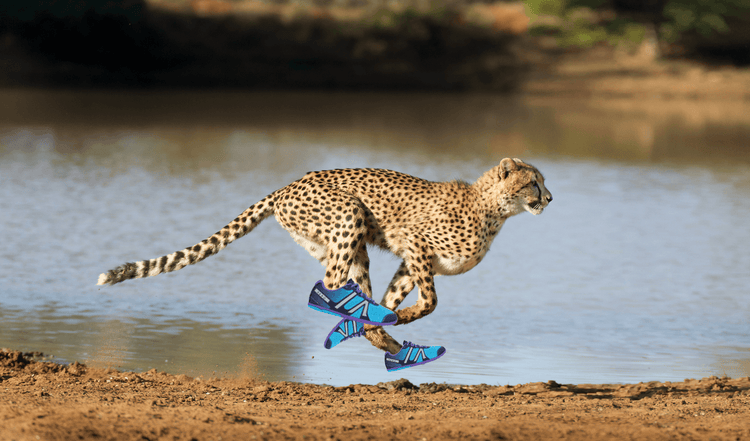
Introducing the Front Runner, the first shoe designed to improve the health and performance of rehabilitating cheetahs.The design idea came from New York City Zoologist, Dr. Lex Rodriguez, after noticing that when cheetahs were released back into the wild, the paws of these magnificent cats were not able to handle sticker burrs, hot gravel, sharp rocks, and even the friction they develop by running at over 60 miles per hour.Says Dr. Rodriguez, "I've worn Xero Shoes for years and it occurred to me that the protection, and ground feel you get from these shoes, could be effective for helping these animals transition back to their natural habitat.When he was approached for this project, Xero Shoes CEO was instantly interested."I've been a competitive sprinter since I was a kid," says Sashen. "So it's not surprising that cheetahs are my favorite animal."The Xero Shoes team took their top-selling running shoe, the HFS, and quickly adapted it for feline feet.Both Xero and Dr. Rodriguez were initially skeptical about how the animals would adapt to wearing footwear."We've all seen how domestic cats behave when they step on tape," Sashen said. "They walk around trying to shake it off. We thought the big cats might react the same way."Dr. Rodriquez was more than pleasantly surprised by the initial results. “It’s amazing. They adapted almost instantly. It’s like they don’t even notice or feel anything different, but their performance tells a different story.”Over the last 7 months, the Front Runner was tested on 3 cheetahs of different ages that were preparing for reintegration back into the wild.Reports Dr. Rodriguez, "Wearing the shoes prevented their pads from becoming raw, so they were able to run longer, but they still have the same excellent balance and agility, and their toes can still flex and bend naturally."Most surprising, the cheetahs increased their top speeds by 6%.The zoological research team is still investigating how the performance improvement happens, but the current theory is that the dual-chevron tread gives great traction, without the energy loss that occurs when claws have to dig into the ground.Xero made one significant change between the running shoes they sell online—the Prio, Speed Force, and HFS—they added "Prey Slots" in the FeelTrue rubber soles to allow the cheetah's claws to work naturally when the animal catches prey."There's no value being faster," says Dr. Rodriguez, "if, once you catch up to your prey, you can't, well, finish the job."With just the right amount of protection, the Front Runner should enhance the cheetah's ability to effectively hunt no matter what the elements, keeping the population of prey animals in check and ultimately—helping plant-life by preventing overgrazing.Based on these results, Xero has been approached to develop performance-enhancing footwear for other animals, speedsters and otherwise, including those raised in the wild.Says Sashen, furtively, "I'm not supposed to talk about our 'skunkworks' projects, but we're working on shoes for ostriches, orangutans, and ferrets." Preliminary results are expected by this same date next year.
How to Perfect Your Balance

How to Perfect Your Balance

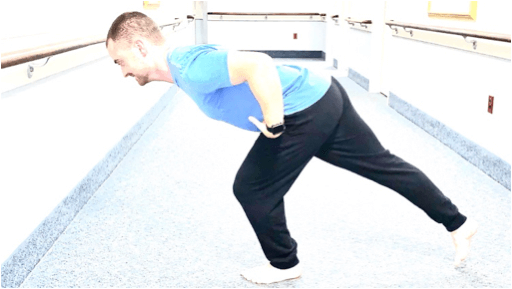
Have you always thought that you just aren't someone with good balance and that's that? Think again. It is totally possible to improve your balance! So how do you do it?  Just like a weightlifter needs to lift progressively heavier weights to get stronger, if you want to improve your balance, you need to challenge your balance by placing yourself in unstable positions. In doing so, your body will develop the reflexes needed to maintain balance in that unstable state. This means that you need to be doing exercises that make you wobble...for if you are not wobbling, you are not being challenged. In time, a given activity that once made you wobble, will soon become easy and so you will need to move on to a more difficult activity.Safety first: If you’re concerned that you might fall during a balance exercise, always keep your hand close to some type of support like a sink, counter, or sturdy chair. However, when performing the exercises, you should keep your hands just above your security support and only use them when you feel like you may fall. By having your hands just above the support, you will not rely on your hands to steady yourself and instead will use the balance reflexes found in your feet, legs, and torso. So, let's begin. For an extensive list of balance exercises I regularly use as a physical therapist for patients, head to  https://programs.perfectingmovement.net/catalogIf those exercises are either too easy or too difficult for you, all balance exercises can be made more difficult by reducing the amount of visual input you are receiving. This can be done by performing the activity in a darkened room, with eyes squinted, or with eyes closed. In this way, it will limit the amount of visual input your brain receives and so will force you to rely more on your other systems for sensory input.Exercises can also be progressed/modified by standing on an unstable surface such as a foam pad, BOSU ball, wobble board or even a slack line, all of which of course will make you wobble more. As always, anytime you are wobbling, you are challenging yourself and are actively in the process of making your balance better!In this program, I have balance exercises for people of all ages ranging from high-level athletes to geriatrics.So, are balance exercises for athletes too??Absah-freakin-lutely...having good balance as an athlete is crucial toward preventing injuries. This is because good balance is essentially having good neuromuscular control. Without good neuromuscular control, one loses control during movement, and so is at a much higher risk of getting injured. Think about it: Running, cutting, sprinting, braking: all of this happens on one leg at a time. Therefore it is essential to have good neuromuscular control on one leg; ie good balance. Squats and deadlifts are great exercises, but they won’t improve your control/balance on one leg needed for activities like sprinting, cutting, running, and pivoting. Therefore, awesome single balance = not getting hurt = being a real winner.Footwear which can immediately create better balance:When using a thinner, flatter shoe with a wide toe box, one typically has better balance. This type of footwear is called “minimalist”, or “barefoot” footwear. Xero Shoes are definitely my preferred minimalist shoe brand.Here are some of the characteristics and benefits of a minimalist footwear: A wide toe box which allows the toes to splay, creating a wider base of support. A flat sole without support which does not throw off the natural positioning of the foot and ankle. A thin sole which places one’s center of gravity lower to the ground to create improved stability. A thin sole which also allows one to feel the ground more easily. In this way the brain has faster and more descript sensory input needed to create more rapid and effective balance reflexes. In contrast, most traditional shoes have thicker soles, motion limiting “support”, narrow toe boxes, and elevated heels. All of this will disrupt the body’s natural sensory and reactive needed to maintain balance.As a physical therapist, I have had AMAZING success in getting my patients in a minimalist footwear for both reducing pain and improving balance. Once my patients start using minimalist footwear, it is extremely common that they report feeling more balanced and more confident on their feet.Lastly, it is essential that one learns how to walk with proper technique in order to prevent a loss of balance, slip, or a rolling of the ankle. This is because walking with good technique places the foot more beneath the center of mass so that you have better control. Often people take an excessively long stride where the foot is too far forward from the center of mass. The further the foot is away, the less control you have and so are at higher risk of injury. As a guy who used to constantly sprain his ankle, I no longer do so. What changed? I almost exclusively use minimalist shoes and have improved my walking and running techniques. Here is a great video resource to learn how to walk the right way from PerfectingMovement.Net.– James O’Brien MSPT, OCS, CSCS,  from PerfectingMovement.netThe content of this post does not constitute and is not intended to be a substitute for professional medical advice, diagnosis or treatment. Always seek the advice of a physician or other qualified health provider with any questions or concerns you may have about your health or a medical condition.